Observations: MBAs & Government

Sometimes I am reminded that there are a lot of observations & stories that I tell in real life that I haven’t shared on this blog.  This is one that I’ve mentioned in conversation three times this week, so I’m making an effort to actually write it out.

When I attend business school at Harvard, I took a couple of elective classes that were roughly equally populated by both MBA students and Government students.  Harvard is fairly unique in that it has both a world-class business school (technically, the oldest) and a world-class government school (Kennedy School of Government).

What I learned in these classes had less to do with the material, and more to do with the fundamental difference in mindset between the two types of students.

In every class, for every business case, the argument almost always broke down as follows:

The MBA Students:

Tell us what the rules of the game are, and we’ll tell you how to win the game.

The Government Students:

Tell us who you want to win the game, and we’ll tell you how to make the rules.

Needless to say, the conversations typically went nowhere.  The business students always felt it was unethical to either change the rules mid-stream, or to create an unlevel playing field.  The government students always felt it was unethical to set up rules that weren’t destined to generate the ideal outcome.

Let me know how many times you see echoes of this disconnect in both business &  political discussions.

Thoughts on the Obama IRA

Nice quick piece today in the Wall Street Journal about the proposed “Obama IRA”:

WSJ: Breaking Down the Obama IRA

It’s been a while since I’ve written a personal finance-related post, but this move towards fixing our retirement savings policies in the United States is the most promising since 2005.

Here are the basics of the Obama IRA, at least, based on current information:

  • Companies with 10+ employees will have to start offering payroll deduction service to contribute to a “Universal IRA” account.
  • Employees would be automatically enrolled at 3%
  • Employees can set the rates higher or lower
  • Employees would get a few specific options:  Series I Savings Bonds, Money Market, Stable Value.
  • At approximately $3000 – $5000, the amount would migrate to a Target Date Maturity Fund

That’s it on details.  There are a few things I like about this plan:

  • Broadly available. Most people would be covered under this plan.
  • Opt-out. The libertarian side of me loves the fact that people can choose their own contribution limits.  The behavioral economist in me loves the fact that the default state is set to opt-out, so that inaction leads to some savings for everyone.
  • Low cost. The structure of the plan ensures low cost options for both employers and employees.  Today, far too much hard earned money is literally wasted through hidden and exorbitant fees charges by retirement plans and mutual funds.
  • Simple investment options. Most people do not need a wide variety of options to provide a good, default retirement vehicle. This one keeps it simple.

Things that I don’t like:

  • 3% is too low. There is absolutely no possible way that a 3% contribution is going to help provide for retirement in a meaningful way, at any income level.  Most “opt-out” advocates currently recommend starting at 3%, but automatically increasing at a rate of 1% per year until they hit 10%.
  • Why tie this to employment at all? These plans should be available to anyone, particularly self-employed who don’t have the sophistication to set up more advanced vehicles.  In fact, imagine the option at tax-time to direct your refund towards your retirement account.
  • Create an open market for running these accounts. Define the “plain vanilla” investment types.  Cap the expense ratios that can be charged.  Allow any private firm to offer these plans.  USAA, Vanguard, etc will compete for this large pot of assets ($100B+ per year at current estimates).
  • Add an Immediate Annuity option at retirement. One of the biggest problems people have with 401k & IRA plans today is a lack of sophistication on how to turn a lump-sump into income that will last the rest of their lives.  It’s a version of the lottery-winner problem.  Offer a standard conversion for these accounts into a combination of a partial sum, an immediate annuity, and longevity income insurance to guarantee that you will have a certain amount of income until you die.  That’s what people really like about traditional pensions & social security.
  • Exempt these accounts from Social Security Means Testing. By means testing Social Security, we’ve already created a perverse incentive where incremental income in retirement can be taxed, at some levels, at more than 100%.  Give these accounts a boost by exempting income from these accounts from income tax calculations in retirement.  Otherwise, we’ll continue to penalize the ants who save for the winter vs. the grasshoppers who spend through their spring & summer months.

The plan isn’t perfect, and there is ample opportunity for the current Congress to complete mess it up.  But conceptually, the Obama IRA is starting to move in the right direction.  Ironically, it shares some of the goals of the privitization of Social Security – shift the nation towards providing for retirement through individual savings & investment rather than through transfer payments.

I’m working on a follow up post that outlines what I believe would be a better direction for retirement savings, since it’s clear that the previous concepts of pensions, social security, and the 401(k) all have significant weaknesses.

Timber Interview: Adam Nash

Of all the unexpected outcomes that have come out of my blogging experiment here on WordPress, one of the most surprising has been the amount of attention I received for a post on why I like investing in timber.

Why I love Timber as an Asset Class (November 10, 2006)

Since then, from time to time, the article has been referenced in investment blogs and journals.  For example, I am still getting hits to my blog based on the following article on Seeking Alpha:

Last year, I was flattered to see a quote of mine show up in Nuwire Investor:

What I didn’t realize at the time I wrote this blog post in January 2008 was that my entire interview was actually posted online.  That’s right. You can read the whole thing in all of its glory:

How embarrassing.  I remember doing this interview over the phone in March 2007 from a conference room from the Toys building at eBay.

Still, it’s a matter of public record now.  So enjoy, if you are curious.  I still do love timber as an asset class.

Would You Pay $12.99 for 5 Hours of Facebook?

This is a note I meant to post over a week ago, but didn’t get around to it.

The question is, would you pay $12.99 for 5 hours of Facebook?

The reason I ask is, until a couple weeks ago, I would have assumed the answer was no.  Facebook has become the latest in a line of great, free internet products.  It flows open and free, like a trillion pages of Niagara Falls, unimpeded by usage charges.

Then I flew Virgin America to JFK & back.  5-6 hours each way.  And the flights had Wi-Fi.

(The Wi-Fi was fantastic, by the way.  I got a phenomenal amount of work done on the plane, and having live access to email and the web was incredibly useful.  Having realtime access to Twitter wasn’t as useful, but certainly was fun.  I also saw some funny behavior patterns – like people watching live sports on the laptops while their seat-back television was on CNN or CNBC.  Anyway, I digress…)

For $12.99 you got wi-fi… for about 5 hours.  Worth the cost most likely to make the flight productive for work, especially compared to an $8 snack pack.

Next to me on the plan was a woman, likely 20-25 years of age.  As soon as we were allowed to use our laptops, she flipped hers open, paid the $12.99… and went to Facebook.

I was sitting one seat away from her, so I could see what she was doing.  She spent about 3 hours on Facebook, with a small amount of miscellaneous web surfing mixed in.  But it was almost all Facebook.

It was interesting to me, because the economics of Facebook have been fodder for discussion in the Valley for a couple of years now.  And here I was, watching someone pay $12.99 for Facebook.

It then occurred to me how much money the “dumb pipes” of the internet are really making.  How many people upgrade their internet service to broadband because they want to make YouTube faster?  How many people are effectively paying the service providers to access content created by others?  How many people pay charges for internet service at hotels, airports, coffee shops?  To wireless providers, cable providers, satellite providers, phone providers?

It’s an interesting counter-balance to the argument that the service providers give for bandwidth throttling and other pricing power maneuvers.  They would still argue they aren’t getting enough of the pie.

Still, I’m pretty sure that Facebook got 0% of that $12.99.

Makes you realize why AOL actually worked back in the day.  You know, in simpler times.

Two Thoughts on the AIG Bonus Scandal

I normally don’t comment on politics here, but wanted to share a couple thoughts I had about the recent churn and furor over the $165M in bonuses paid out to approximately 370 employees in the AIG financial products division.  As everyone now knows, this is the same division that apparently ended up with such large unhedged exposure that it required $170B of US government “investment” to prevent global economic collapse.

Now that’s chutzpa.  World record chutzpa.

Obama is pushing hard to get this reversed.  Trouble is, the contracts were signed before the bailout, and Connecticut actually has a law that requires double payment of withheld compensation.  Way to go, worker protection laws.  A couple thoughts:

  1. Avoid Bankruptcy at your own peril.  Our legal & financial system is like a giant, complex distributed system.  As anyone who works on distributed systems knows, common definitions and patterns are essential.  We have a pattern that’s been built over more than a hundred years for having debts greater than ability to pay.  It’s called bankruptcy.

    The problem is, AIG never went bankrupt.  That means all of the common agreements and assumptions, both written and unwritten, about failed businesses no longer apply.  In a bankrupt company, all debts are subject to negotiation, including wages and compensation.  Every state is different, but the lattitude to control the existence of prior contracts is huge.  By not letting AIG go bankrupt, we’ve probably actually limited the number of options we have in this and thousands of other situations tremendously, because there isn’t a hundred+ years of legal precedent for businesses that “should have failed but didn’t because of US government investment”.  Nope.  None.  As a result, a lot of laws that apply to companies that don’t go bankrupt apply here.

    This should be a giant warning flag to anyone who thinks keeping the auto companies in pseudo-bankruptcy is a good idea.  (They themselves are beginning to realize that negotiations with creditors, suppliers, distributors and the UAW are very complicated when you can’t invalidate contracts…)

  2. Sunshine may be the best disinfectant. I’ve heard a variety of proposals on this topic, ranging from the fatalistic (you can’t take the money back) to the extreme (we’ll fire anyone who takes the bonus.)  I’m skeptical that the latter really has teeth (Here.  Take $3M.  Don’t come back!), and I’m concerned the former declares defeat.

    Here is a middle proposal.  Publicity.  Cuomo is right on this one.  Give in to the subpoena. Publicly list the name of every single employee of AIG that receives a bonus over $5000 this year.  Name, Title, City, State.  Give them the option of declining the bonus, or appearing on the list.

    In this economy, with this attention from the public and the government, that list is one place I wouldn’t want my name to be.  It would follow you forever, and that’s assuming the government doesn’t directly target you.

Just a thought.  It might be naive, and I’m not sure of the legality of putting names on a list like that where a lynch mob might literally come out with torches and pitchforks.  But it’s a thought.

In Defense of Repricing Stock Options

This is actually news from last week, but Google announced that they are repricing their employee stock options.

John Batelle has fairly representative coverage on his blog.  His post cites coverage from Adam Lashinsky at Fortune (a personal favorite as a journalist) with a fairly typical dig on the issue.  Here’s the actual quote:

One last item of note. Google is offering employees the opportunity to exchange underwater stock options for newly priced options due to the stock price having been hammered. (The only catch in the exchange is that employees will have to wait an additional 12 months before selling re-priced options.) The stock price is  currently around $300, compared with $700 in late 2007. The number of shares eligible for exchange is about 3% of the shares outstanding, and the exchange will result in a charge to earnings of $460 million over a five-year period.

One must re-phrase this last bit in English: Google is transferring almost half a billion dollars in wealth from shareholders to employees, and for what ….? Motivation and retention, says Google. This a well known farce, as old as the Valley, which tells itself first that it offers generous stock options as a form of incentive and then, when share prices plummet, moves the ball so its employees, whose incentives apparently didn’t work (as if the stock price were under their control) can be re-incentivized. Retention? Would someone please tell me where the average Google employee is going to go right now?

To be clear, there have always been people who have a significant problem with employee stock option repricing, and with good reason.  Theoretically, options are supposed to align employee interests with shareholders.  In an ideal world, the employee wins if the shareholders win.   Repricing, therefore, breaks this model, because, after all, no one reprices the shares purchased by outside shareholders when the stock tanks.

Somewhere in the post-2000 bubble hangover, this criticism went from being a common argument to conventional wisdom.  Accounting standards were changed to require the expensing of employee stock options, and stock option repricing became largely verboten.

I rarely see anyone in the financial press explaining anymore why, in fact, there are very good arguments for stock option repricing.  So, I’m going to take a quick crack at it here.  Even if you disagree, it does a disservice to not reflect both sides of the argument fairly.

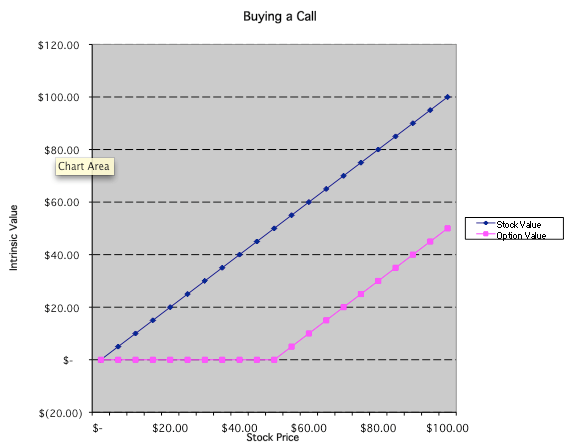
First, and foremost, it’s important to note that, while options are intended to help align employee interests with shareholders, stock options, in fact, do not do this in all situations.  The problem is the inflection point in the curve.
picture-11

This is a simple chart that shows the intrinsic value to an employee of a stock option with a strike price of 50 at different stock prices.  Notice the blue line, which is stock, actually reflects a 1:1 ratio of value.  If the stock is worth $10, the employee gets $10, etc.  For the stock option, however, there is a “break” in the line.  Below $50, the employee gets $0.  Above $50, the employee gets $1 for every $1 of stock price increase.

In general, employee stock options are granted at the strike price of the stock roughly on the date that they join.  So, the assumption is, this aligns the employee with gains after they join.  In theory, it’s even better than stock, because if the stock drops, they get no value for gains made before the date of their join.

This sounds good in theory, but we know that it has real problems, on both the upside and the downside.

On the upside, most stocks go up every year.  (Yes, I know.  In 2009, it’s hard to remember that.)  If the stock market itself goes up 7% every year, then an employee will see real returns on their stock options for just “matching the average”.  In fact, they can actually see real material gains over long periods even by underperforming their benchmark index.

However, since shareholders also enjoy that benefit, it tends to only get complaints when you see incredible gains by executives with huge option packages.   No one likes to see an outsized pay package for undersized performance.

On the downside, however, the problem is much more severe.  Let’s say our stock example from above drops to $25, a price that the company hasn’t been at for 3 years.  The good news is that shareholder alignment works, to a point, as advertised.  Not only are shareholder gains for the last 3 years wiped out, but so are the option grants for employees who joined in the last 3 years, and even any other employees who received grants in the past 3 years.

That part seems fine… at first.

Where does the company go from here?  Now we need to talk about the principle of sunk cost.  Sunk costs are costs that cannot be recovered, and therefore should be ignored when making future investment decisions.  (More rigorous explanation on Wikipedia).  For stocks, it’s important to remember the stock market does not care what you paid for a stock.  It has no memory.  The question for a shareholder (barring external effects like taxes, etc) is purely where you think the stock will go from here.

But now we see that the employee is no longer aligned with the shareholder!  From $25, most shareholders would love to see a gain of 20%, which would take the stock to $30.  But for employees, a $30 share price and a $25 share price mean the same thing:  $0.

Worse, if employees leave the company, and get a job at a new company, they will get option prices at today’s stock price.  In fact, if the employee quits the company, and then is rehired back, they would actually get their options priced at today’s stock price.

In a world of at-will employment, this is a big problem.  True, as Adam Lashinsky pokes at, most employees won’t be able to find a new job so fast.  But many of the good ones can.  And they will.  Because your competitor can actually come in with in a simple, fair market offer for the employee, and beat your implicit offer of zero.  Even if they don’t do it today, these problems tend to persist for long periods of time, and employees have long memories.  You may find that your best talent starts leaving, and then you get snowball effects because great talent is hyper-aware when other talent leaves.

So what is a company to do?

In a perfect world, the company would have a very tight and accurate evaluation of their best talent, and would target “retention compensation” proportionally to their people based on their value.  This would both minimize the risk of flight, and would also help “re-align incentives” for the gains going forward.

Unfortunately, the mechanics and accounting of repricing makes this fairly prohibitive.   As a result, it tends to be an all-or-nothing option.

The truth is, repricing stock options can be one of the best things to realign employee incentives going forward.  It resets the vesting period, basically treating employees like new employees.  The employees do not get to go back in time and recover their equity compensation for the past three years.  The new vesting period basically wipes out the history.  They literally no longer own the rights to the shares – they have to re-earn them.  In fact, if the employee quits the next day, they will take no stock with them, even if they worked for the company for three years.

As a result, stock option repricing actually re-aligns employees more closely with shareholders than nay-sayers give credit for.

Last thoughts

While I am explaining the reasons why repricing stock options makes sense, there is still the significant problem of “repeat abuse”.  If employees believe all options will be repriced for all drops, then you end up with a moral hazard, where you might actually want to drive down the price, get your options repriced, and then recover easy gains.  True, the market is fairly hostile to repricing due to the accounting charge, so it’s unlikely this would happen, but it’s still a real concern.

As a result, my recommendation would actually be that companies faced with this situation actually use the opportunity to not reprice stock options, but move to actual stock-based compensation.  Both have an accounting charge, but actual stock-based compensation serves three purposes:

  • The new stock grants can be better targeted to employees based on performance and value
  • The new stock grants have immediate value, serving as a kind of retention bonus
  • The new stock grants align the employee with shareholders going forward in both up and down markets

So while I do believe that repricing stock options gets a “bum wrap” in the financial media, I also believe that there may be potentially better compensation alternatives, particularly for public companies.

The Benefits and Pitfalls of Inverse & Double/Triple ETFs

Caught this article on Seeking Alpha on Wednesday on the problems with using inverse ETFs.  It reminded me of a topic that I’ve debated quite a bit with Elliot Shmukler over the past two years, and have been meaning to write about here on the blog.

Since I haven’t commented much on personal finance topics lately, this seemed like an opportune time.  🙂

Quick set of definitions, if you aren’t familiar with the topic:

  • ETF:  Exchange Traded Fund.  These are funds that are similar to mutual funds, except that they are traded like stocks.  For the most part, they are index funds with extremely low expenses.  In the last five years, there has been an explosion of index-based ETF funds, ranging from the plain vanilla US Stock Market to indexes only for water companies.
  • Inverse ETF:  This is a fund that makes money based on the opposite direction of an index.  Example: An S&P 500 bear ETF, or inverse index, would attempt to give you a positive 20% return in the case that the S&P 500 dropped 20%.
  • Double/Triple ETFs:  A double (or triple) ETF attempts to give you double (or triple) the returns of a given index.  For example, a double oil fund would attempt to give you a 20% return in the case that oil rose in price 10%.

The original discussion Elliot & I had was back in 2007, when we were comparing two hypothetical portfolios:

  • Portfolio 1:  100% invested in the S&P 500
  • Portfolio 2: 50% invested in cash, 50% invested in double S&P 500 ETF

At first blush, it might seem like Portfolio 2 is the winner.  After all, with Portfolio 2, it would seem that if the stock market were to drop more than 50%, Portfolio 2 would allow you to keep 50% in cash safe and sound.  If the stock market returns more than negative 50%, then the portfolio seems to offer exactly the same return as Portfolio 1.

The trick, however, is the nature of the double ETF itself.  Double ETFs are not perfect instruments – because they simulate returns using derivative contracts, they try to match their promised returns on a daily basis.  (I’m assuming here, by the way, that the simulation of returns is perfect.  In real life, these funds have an additional problem of tracking error due to the nature of the way they are implemented.)

So if on Day 1 the S&P 500 goes up 1%, the double ETF tries to return 2%.  I say “tries” because it’s rarely perfect.  If the next day the S&P 500 drops 2%, the double ETF should drop 4%.

Unfortunately, it turns out that the math for doubling daily returns does not necessarily lead to a long term result that matches the long term double of the index.

An easy example of where this breaks is to take a huge increase followed by a huge drop.

Let’s say you put $1000 into the S&P 500, and $1000 into the double S&P 500 ETF.

On Day 1, the index goes up 40%.  Great news!  Your $1000 in the S&P 500 is worth $1400.  Your $1000 in the double S&P 500 ETF is now $1800, expected, for a 80% gain.  Everything is as expected on Day 1.

On Day 2, the index goes down 40%.  Bummer.  Your $1400 in the S&P 500 is now $840.  Your $2000 in the double S&P 500 ETF is now $360.  Wow.  That’s bad news.

You can see the problem.  Technically, over two days, the S&P 500 dropped 16%.   But the double S&P 500 ETF dropped 64%.  Most people assume it would have dropped 32%, which is double the two-day return.  This is the issue with percentages – the product of a series of percentage changes will not equal the product of a series of 2x those same percentage changes.  (Covered in Calculus D at most schools, for those in a nostalgic mood).

If you are skeptical, you might be thinking: “Well, Adam just picked the extreme example.  Of course a one day 40% move wipes you out. Most stock market moves are small, so the error is small.”

Unfortunately, this isn’t the case either.  A long series of small moves can lead to large errors as well.

Let’s assume a stock market where every day is either up 2% or down 2%.  In this case, we’ll go up twice for every down.

Let’s say you put $1000 into the S&P 500, and $1000 into the double S&P 500 ETF.

After thirty days of +2%, +2%, -2% (10 times), here is what you are left with:

You’ll have $1214 in the S&P 500, for a 21.4% gain.  But you’ll have $1457 in the double S&P 500 ETF for a 45.7% gain.  In just thirty days, you’re off by 6.6% (in gains).  In this case, it’s a good thing, but obviously in a market like the one we’ve been having over the past six months, it can be a very bad thing.

In fact, over the long term, the errors can be fairly extreme, and whether they are to your benefit or not is based purely on the size and ordering of the volatile movements.  The only way to get ride of the errors is to have an absolutely equally distributed, linear progression of the market in one direction.  And let me be the first to say that we will never actually see that happen.

So, what’s the takeaway here?  Simple.

The errors in inverse and double/triple ETFs grow rapidly based on volatility.  In low volatility markets, they can be used for a short period with expected results.  Like options and other derivatives, however, their tracking errors make them poor choices for long term allocation or investment.

They do make interesting options for speculative bets in the short term, especially in situations where:

  • You want to keep liquidity (ie, cash available)
  • You want to limit your downside to 50%

But watch out for those error rates…

New Years Resolution: Avoid Medical Myths

This is a fun post going into 2009.   Freakonomics pointed to a great piece at the British Medical Journal (part 1 & part 2) which goes through a fairly large number of medical myths that are widely believed, but that we now know to be false.

No sense going into 2009 repeating these falsehoods.  Although, despite being armed with the truth, no doubt many of your friends and family members will insist to the bitter end that “they know these to be true.”  (I watched a debate on #1 go on for over fifteen minutes this weekend between two family members.  I stayed out of it.)

In no particular order:

  1. Sugar does not cause hyperactivity in children.  In fact, if anything, they have proven that if you tell parents that their kids have had sugar, they will believe that they are more hyperactive.
  2. Suicide rates are not higher over the holidays. At least, not in the United States.
  3. Poinsettias are not poisonous. Chomp all you want, you won’t be able to kill yourself this way.
  4. You do not lose most of your body heat through your head. It’s only about 10%.  Wearing a hat is not the key to being warm, although it might be the key to feeling like you are.  The wonders of placebo.
  5. Eating food late at night does not make you fat. This is one of those “logical” facts that no one bothered to check out… until they did.  And found out it wasn’t true.
  6. You do not need to drink eight (8) glasses of water a day. This one surprised me.  No evidence for this at all.
  7. We do not use only 10% of our brains. Total BS from the turn of the century (last turn, that is.)  We’ll have to come up with another excuse for why everyone isn’t brilliant.
  8. Shaving hair does not make it grow back darker and thicker. So many people swear this is true.
  9. Reading in low light does not ruin your eyes. Seems like good news for the last few Americans who read.
  10. Eating turkey does not make you sleepy. Or at least, any sleepier than any other meat.  Yes, I know this gave everyone an excuse to know what tryptophan is (or at least, pretend like they do.)

Please do not take this post as some sort of challenge to pick fights with the less enlightened out there.  Believe me, they outnumber you greatly.

Instead, feel good knowing that your knowledgebase is that much cleaner now that you’ve cleaned out some of the garbage before 2009.

Refinancing? Try Pentagon Federal Credit Union (PFCU)

With rates plummeting these days, many people are choosing to refinance.  My family falls into that bucket, as we refinanced our home almost five years ago (2004) at the low, low rate of 4.5% for a 5/1 mortgage.  (In case you are curious, we ended up getting a 5/1 because while 30-year rates were also low, we felt it unlikely that we’d be staying in our current house more than 7 years.)  At the time, I remember looking at historical rates and saying:

When will we ever be able to refinance at 40-year lows again?

Silly me, the answer turned out to be about five years later, in late 2008.  Since our rates were about to float, and not trusting the bank to keep the rate reasonable, we decided to lock in rates for at least another five years.  In the process, we evaluated almost every web-based pricing agent, several internet deals, and one professional mortgage broker.

The winner: Pentagon Federal Credit Union

To get a mortgage, you must join the credit union.   You can do this for free if you or a family member served in the armed forces and has proof.  Otherwise, you can sign up to join the National Military Family Association for $20.  Yes, that’s right.  $20.

I’ve been extremely happy with the service.  In fact, when we originally engaged with them, the rates on a jumbo 5/5 mortgage (a unique mortgage they offer that resets every 5 years based on US Treasury rates) were at 5.375%.  They have dropped twice since then, and they allowed us to reset at their current price of 4.625%.

Yes, I know there is probably a better deal out there.  But I also know that most are worse.

In any case, they are worth checking out.  Their rates are updated daily.  Low closing costs.  They depend on Fannie Mae for securitization, so it’s really a good deal if you have a good credit score and fit within guidelines.  No points for loans under 70% LTV.  0.50 points for loans between 0.70% and 0.80% LTV.

If you find a better deal out there… don’t tell me.  I’m happy enough as is.  I may ask for you help again in 2014.

Or, at the rate we’re going, if rates plummet to 100 year lows in 2009, we might refinance again.

3% mortgages?  That’s the magic of deflation

Understanding Deflation: Bonds Paying 0%

There wsa a good article in today’s WSJ (requires subscription) describing the unique point we hit today in the bond market.  Some durations of US Treasury bonds are now actually paying negative interest, -0.01% in some cases.

Investors around the world are stuffing their money into a mattress — otherwise known as the U.S. Treasury-bond market.

Fund managers, corporate treasurers, hedge funds, banks and central banks want to show their constituents, or bosses, their portfolios are bulletproof as year end approaches. Even with all the government’s steps to shore up the credit markets, investors aren’t taking any risks. Instead, they are willing to pay a premium, rather than collect one, to ensure they have in 2009 what they have now.

That means that someone is paying $100.00 for the priviledge of  getting back $99.99 at the end of the term.

This may sound ridiculous, unless you think of it in plain English:

“I’m willing to pay the US Government one penny to keep my $100.00 safe and sound for this duration.”

In a world of fear and deflation, this statement starts to make sense.  Hell, you might even pay more than $0.01 for that security in some cases.

Deflation is a very weird financial state.  For most people, it’s completely counter-intuitive. It’s a world where cash today is worth less than cash tomorrow.  It’s a world where commodities (like gold, silver, oil, food) get cheaper over time nominally, not more expensive.  It’s a world where you don’t buy today, because tomorrow the same product will be cheaper.

In fact, the only large segment of the population at this point who likely have an instinctive feel for deflation are people tied to high technology, primarily hardware like hard drives and semiconductors.  They’ve spent 30 years dealing with the fact that their products will be cheaper tomorrow than today.  They’ve even created high return businesses in effectively a deflationary environment.

I’m not going to go into detail about all aspects of deflation in this post.  But I did think it was worth explaining why 0% bonds might make sense.

Think about the dangers for keeping cash:

  • Someone could steal it.  So you have to secure it.
  • It can get physically destroyed (fire, pets, small children)
  • You can invest it, but those investments may lose money (stocks, bonds, commodities, you-name-it)
  • You can put it in a bank, but they may go bankrupt.  (you are protected up to $250K, but you may not get it immediately)

When people are afraid, and liquidity is rushing out of the system, 0% guaranteed by the ultimate “too big to fail” institution in the world can sound pretty good.

Now, I doubt this makes sense for individuals with dollars measured in thousands.  With those numbers, you can get 3+% on a CD, guaranteed by the FDIC.  But for institutions with millions or billions, how do you protect your cash?  Seriously.  It’s not a trivial problem when you think about it.

And no, you can’t just “go to gold”.  Even gold drops in nominal value during deflation.

Mathematically, if a country is undergoing 5% deflation per year, that means that $1000 of gold will only cost $950 in a year.   From that point of view, 0% percent interest + 5% deflation = a 5% real return on your capital, adjusted for inflation.

Yes, it seems like a monetary phenomenon from Bizzaro’s home planet, a square world where people say “goodbye” when they come and “hello” when they go.

But that’s what we’re flirting with right now, as it seems like literally $20 Trillion in nominal value may have disappeared off the planet.

The silver lining, however, is that you can make money in a deflationary market, if you re-orient your thinking.  Sell your products quickly, for cash.  Money now is worth more than money later.  Prioritize products that buyers cannot postpone.  Inventory turnover is key.

Intel has made billions turning over products that drop in value 1% a week in some cases.  It can be done.

Recession Began in December 2007. Official PDF Here.

I’ve been looking all over the web for the actual technical document that was published today that declared the recession start as December 2007.  Personally, I found the news reports on this terribly lacking – it’s really quite confusing how the recession could start before two sequential quarters of GDP growth.

The full PDF is here.  The synopsis:

The Business Cycle Dating Committee of the National Bureau of Economic Research met by conference call on Friday, November 28. The committee maintains a chronology of the beginning and ending dates (months and quarters) of U.S. recessions. The committee determined that a peak in economic activity occurred in the U.S. economy in December 2007. The peak marks the end of the expansion that began in November 2001 and the beginning of a recession. The expansion lasted 73 months; the previous expansion of the 1990s lasted 120 months.

A recession is a significant decline in economic activity spread across the economy, lasting more than a few months, normally visible in production, employment, real income, and other indicators. A recession begins when the economy reaches a peak of activity and ends when the economy reaches its trough. Between trough and peak, the economy is in an expansion.

It looks like the discrepency is based on some of the differences in measurement for GDI (Gross Domestic Income) and GDP (Gross Domestic Product), which should be equal, but due to measurement issues, often are not.  Predominantly, it looks like employment peaked in December 2007, making everything afterward post-inflection.

My personal opinion is that too much was made of this today in terms of the stock market – a lot of trading these days seems to hinge on which historical analogy happens to be in vogue that day.  Today, the meme was “long recession”, with the December 2007 technicality confirming that we’ve “already had a recession of 12 months!” which is historically long for a recession.

Anyway, I’m sure readers out there with an economics background will appreciate the actual report, versus the drivel in the popular media.

J-Curve & The Hype Cycle: Potential Exits

Will Hsu had a very interesting post on his blog, Hitchiker’s Guide to 650.  (Yes, it’s a pretty cool blog title)

Will overlayed the now infamous Hype Cycle and a hypothetical startup valuation J-Curveover each other, like this:

2989415251_27295b1663

(Minor nits – the J-Curve here likely shouldn’t start at zero, but at some higher amount.  The founding team and the concept itself has some value, and typically, while the startup is nascent, the value hinges on that alone.  In fact, it probably rises initially as risk is taken off the table with a few key hires/revisions.  It doesn’t change the insight from the overlay, however.)

He then postulated a few different exit points, with reasonable valuations and time frames, and then highlighted the different ROI values for each.

  • Exit #1: 2~4x, 50~150% IRR (assuming 1.5~2yr hold, 1~2 rounds)
  • Exit #2: 2~4x, 30~70% IRR (assuming 3~5yr hold, 2~3 rounds)
  • Exit #3: 10~100x, 30~70% IRR

(You can read the full details here)

I must have seen versions of the  J-Curve and The Hype Cycle curves a hundred times, but for some reason, seeing them overlayed in the context provides some unique insight into the highs (and lows) of a venture backed startup.  It also highlights the incredible cost to being caught flat-footed (ie, needing cash) at the wrong points in the curve.

I also like the clear, numerical validation of a simple truth of venture investing (and entrepreneurship):  you achieve the highest internal rate of return by cashing out quickly.  But to achieve truly game-changing cash returns for investors (ie, return the fund), the big win is required.

The numbers really aren’t as material as the visualization of the two curves together.

Why the Price of Gold is Sinking Fast

The price of gold has dropped below $700 an ounce, and that has a lot of people in the precious metals community puzzled.

After all, isn’t gold supposed to be a safe haven in times of financial depression and panic?  And if these aren’t times of financial depression and panic, what are?

After all, every country in the world is busy running their printing presses to fund bailouts and fight deflationary forces.  Gold should be on its way up, not down.

If you want to see a good article on the topic, there is some nice coverage here on Marketwatch

Gold futures hit a historic high above $1,000 an ounce a few days after Bear Stearns was taken over by J.P. Morgan Chase & Co. on March 14. But in the recent round of crises triggered by the collapse of Lehman Brothers Holdings Inc. gold has fallen to below $700 for the first time in 13 months. The metal has so far lost nearly $170 this month.
The reason, according to analysts at the World Gold Council, is that the latest bout of the credit crisis has been deeper and more far reaching. Funds were forced to sell desired assets such as gold to meet margin calls, while weakness in European economies lifted the U.S. dollar, which then pushed dollar-denominated gold prices lower.
One of my readers commented today on a blog post I wrote back in August 2007, “The Lessons of Long Term Capital Management (LTCM) & The Volatility of August 2007”.  That article is actually some of my better commentary to date on why historical diversification of assets isn’t helping very much in this downturn.  Here’s a snippet:

This decade has seen an amazing boom in investment tolerance for non-traditonal asset classes.  People freely talk about how different new investment assets have a “low correlation” to the stock market.  Real estate, commodities, rare coins, art, collectibles, long/short funds, you name it.   As a result, across the world, trillions of dollars are now factored into different asset classes, prudently distributed to minimize risk and maximize reward.

This would all be fine except for one thing.  And it’s the one thing that more than anything led to LTCM’s demise.

That one thing is that all of these great measures of risk are based on historical records.  And as all mutual fund prospectus readers know, “past history is not necessarily indicative of future performance.”

You see, you can take two things that historically have not been correlated.  Asset A & Asset B.  But the minute that an investor owns both A & B, there is now a correlation that didn’t exist historically.  The investor is that correlation.

If Asset A goes down, and the investor needs to sell something, they may now turn to Asset B for liquidity.  And that means selling pressure for Asset B, based on nothing but the asset price of Asset A.  Voila, correlation.

Gold didn’t used to trade like a stock in an ETF that anyone could buy.  It was expensive, hard to store, and was distributed through inefficient, clumsy channels.  It was diversified from other investment classes because it couldn’t be bought & sold easily like stocks or bonds.

Now, buying a Gold ETF is trivial, and can be done for less that $10 a trade with very little spread.  In fact, many commodities can.

All of a sudden, in this market, people are realizing that the investors are the correlation.  And that correlation is much stronger than historical analysis would suggest.

Not to get to gloomy, but re-reading my August 2007 post, I caught this somber realization:

What’s worse, those historical models lead investors to believe that they have less risk on their books than they do have, which leads rational investors to introduce leverage into their portfolios.  That means when the risk shows it’s ugly head, the results get magnified by the leverage of loans.

That’s what happened to LTCM.  Their models were excellent, but they were based on historical correlation.  The minute some of their investments turned the wrong way, their incredible leverage forced pressure in previously uncorrelated investments.  What’s worse, other investors, smelling the “blood in the water”, discovered this new-found correlation, and pressed trades against them.

So, this scares me a lot, at least intellectually.  There are very good reasons why major investors like hedge funds and other asset managers can’t share their up-to-the-minute holdings.  That means, however, that no one really understands this type of “co-investment risk” that is building in mass across the markets.  Unfortunately, the only way I can imagine to properly handle this risk would be to have a universal monitoring set up to accurately reflect this new type of correlation from mass “co-investment” across assets.

Ugh.

Personal Finance: The Best Advice is from Saturday Night Live

I have a special attachment to Saturday Night Live, since it debuted the same year I was born.  This skit is genius, and summarizes the best financial advice you are going to get this year.

You can watch it here on NBC.com

Don’t Buy Stuff You Cannot Afford


Scene: a typical American kitchen. A husband (Steve Martin) and wife (Amy Poehler) are puzzling over their finances.

Wife: Oh, I just can’t get these numbers to add up
Husband: Like we’re never going to get out of this hole.
Wife: Credit card debt, does it ever end?
Salesman: [entering from who-knows-where] Maybe I can help.
Husband: We sure could use it.
Wife: We’ve tried debt consolidation companies.
Husband: We’ve even taken out loans to help make payments.
Salesman: Well, you’re not the only one. Did you know that millions of Americans live with debt they can not control? That’s why I developed this unique new program for managing your debt. [Holds up book] It’s called, “Don’t Buy Stuff You Cannot Afford”
Wife: Let me see that. [Reading from book] If you don’t have any money, you should not buy anything. Hmmm … sounds interesting.
Husband: Sounds confusing.
Wife: I don’t know honey, this makes a lot of sense. There’s a whole section here on how to buy expensive things using money you’ve “saved”.
Husband: Give me that. And where do you get this “saved” money?
Salesman: I tell you where and how in Chapter 3.
Wife: OK, what if I want something but I don’t have any money?
Salesman: You don’t buy it.
Husband: Let’s say, I don’t have enough money to buy something. Should I buy it anyway?
Salesman: No.
Husband: Now I’m really confused.
Salesman: It’s a little confusing at first.
Wife: What if you have the money, can you buy something?
Salesman: Yes.
Wife: Now, take the money away. Same story?
Salesman: Nope. You shouldn’t buy stuff when you don’t have the money.
Husband: I think I’ve got it. I buy something I want, then hope that I can pay for it. Right?
Salesman: No. You make sure you have money, then you buy it.
Husband: Oh, then you buy it! But shouldn’t you buy it before you have the money?
Salesman: No.
Wife: Why not?
Salesman: It’s in the book. It’s only one page long. The advice is priceless and the book is free.
Wife: Wow. I like the sound of that.
Husband: Yeah, we can put it on our credit card.
Announcer: So, get out of debt now. Write for your free copy of “Don’t Buy Stuff You Cannot Afford”. And, if you order now, you’ll also receive, “Seriously, If You Don’t Have the Money, Don’t Buy It” along with a twelve month subscription to “Stop Buying Stuff” Magazine. Order today.

Genius.  Pure Genius.  I feel like I’ve actually had this conversation with people before.

Problems with Obama’s Tax Credit = Tax Cut Accounting

I normally stay away from politically tinged posts.  Tonight, I’m posting two.

Call it formal recognition that the McCain candidacy is a lost cause, and that Obama is going to take the White House.  Futures on a McCain win are now down to 15.5% on the Iowa markets, even lower on the Intrade markets.  That’s bad for him, and good for everyone afraid of a McCain victory.  Since the Democrats will likely retain Congress, we will have, for the first time since 1992-1993, a full Democratic sweep.

So the topic turns to Obama, and what he’s likely to do in the next four years.  Obama, like Clinton, actually has a wide set of very smart economic advisors.  Unfortunately, they literally cover the spectrum of economic policy, from conservative to liberal perspectives.  Like Clinton, it’s hard to tell ahead of time which direction he’ll lean on once he’s in office.  It’s Robert Reich vs. Robert Rubin all over again.

This opinion piece ran in the WSJ last week, and it got me thinking.

Originally, I thought Obama’s tax plan was quite clever:

  • You can’t argue that income disparity hasn’t become extreme in the past decade
  • You can’t cut the taxes of most people, because 40% of Americans don’t owe any taxes
  • Most people will not accept higher tax rates to fund new entitlements/distributions
  • Solution: Effective negative tax rates!  That allows a progressive tax system to extend into the non-taxpayer minority, without having to approve new distributions.

The WSJ article, however, got me thinking about the accounting for all this, and it has some scary implications.  From the article:

The Tax Foundation estimates that under the Obama plan 63 million Americans, or 44% of all tax filers, would have no income tax liability and most of those would get a check from the IRS each year. The Heritage Foundation’s Center for Data Analysis estimates that by 2011, under the Obama plan, an additional 10 million filers would pay zero taxes while cashing checks from the IRS.

The basic idea is that Obama will change a large number of deductions to refundable tax credits.  That means that, effectively, a large minority of Americans will actually be paying negative taxes.

The problem sounds like semantics, but it has accounting implication:

When is a tax credit just a distribution?

Why does it matter?  Well, a tax credit is just treated like a negative tax.  So if I tax one person $1000, and give a tax credit of $200, it’s treated like $800 of tax revenue.

Welfare is treated like an expenditure.  If I tax one person $1000, and give $200 welfare to another, we declare $1000 of tax revenue, and $200 of spending.

Both net to $800, but have very different implications for the size of government and the perception of spending.

By using tax credits, Obama can state, with a straight face, that he isn’t going to raise taxes, he’s just going to redistribute the burden more fairly.  And technically, he’s correct.

However, if you treat tax credits as entitlement spending, then you see that what he actually could do is radically increase the tax burden on the country, but cancel out a large volume of transfer payments from the spending side of the equation.  So it looks like the tax burden has stayed the same.  It looks like spending has not increased.

But really what’s happened is that a whole new set of entitlements and taxes have come into existence, but cancel themselves out where no one can see them.

This may not sound like a big deal to you, but this type of accounting shenanigan looks highly prone to abuse.  Imagine what our debate about Social Security would look like if Social Security checks were positioned as tax credits instead of distributions?  Medicare.  Welfare.

I’m not saying that Obama will abuse this system per se, but it’s a bad accounting precedent, started by the Earned Income Tax Credit.  The CBO and GAO should declare that tax credits are distributions, and shift the accounting accordingly.  That would provide accurate transparency in the system, while still giving the government flexibility to tax & spend as it sees fit.

I’m not eager to see Enron-style accounting on this scale.

Update (10/16/2008): A few people have asked me for a concrete example of the problem here.  Here is an exaggerated one:

Imagine that Obama sets the income tax rate to 100%, and then gives back 80% of the money in tax credits.  By the Obama accounting, the government’s take would only be 20% of GDP.  However, in actually, the government has confiscated 100% of all income, and redistributed 80% of it.  The 100% is the number that truly reflects the government take, not the 20%.