Google Reader, Meet the Mac OS X Look & Feel

Now this one is a lot of fun…

I moved my blog reading from My Yahoo to Google Reader about 6 weeks ago.  It has been tough to adjust to the new habit – my instinct is to always go to My Yahoo.  But My Yahoo just wasn’t scaling for the number of blogs I like to keep tabs on (now over 100),  and I noticed that a majority of the people reading my blog were now using Google.

Thankfully, Firefox has made this easier.  The ability to quickly change the behavior of “adding a feed” to Google from My Yahoo made the transition simple for new feeds.

For exporting my old feeds from My Yahoo to Google, I found a nifty tip online on how to export an OPML file from My Yahoo and import into Google Reader.  Just spent a few minutes categorizing all my feeds, and I was ready to go.

Well, today I discovered a new trick.

This post shows you how to skin Google Reader using CSS to look like Mac OS X.  It’s really neat, although it’s a little weird that the author’s name is Adam Pash.

On Firefox, you basically want to go here and download Stylish.  Stylish is an add-on that lets you customize the CSS for any website.

Then, go here to download the Mac OS X theme for Google Reader.

Once you unzip, open the CSS in a text editor, and copy & paste it into Stylish.  On Mac OS X, I had to do this manually by opening the Add-Ons dialog, and open the Stylish preferences, but I got it to work.

It’s pretty neat, and I like the new look & feel of Google Reader.  It’s also pretty neat to see CSS as a form of “lightweight plug-in” for websites.  I’ve got to show this to some of the front-end folks on eBay Express – we use CSS heavily, and I bet you could come up with some pretty neat skins for the site using Stylish.

Amazon S3: Backbone to Cheap Multi-GB Web Backup for Mac OS X?

About a year ago, Amazon launched it’s S3 storage service.  This seemed a little strange to me at the time, because Amazon’s core business is as an online retailer… it was unclear to me what type of strategic advantage they would have as a long term of provider of cheap, online storage.

“Let a thousand flowers bloom,” I guess… (one of the most misunderstood quotations used around innovation, by the way.  Check out the source!)

In any case, I received my regular TidBITS digest email today, and it featured web-backup services for the Mac.  What was interesting was that the article featured primarily applications that use Amazon S3 as their backbone!  At $0.15 per GB, and $0.20 per GB/transfer, Amazon is a fairly cheap way to backup & store large libraries, like music & photos.

Several small software shops have built applications to help users do just that…

Here is the original TidBITS article.  The applications covered include:

  • Jungle Disk.   This application is the most polished of the bunch.  It does not handle incremental backups, yet, but it does support scheduled backups.  It will cost $20 when it reaches 1.0, but it’s free right now in beta.  Jungle Disk is available for Mac OS X, Windows & Linux.
  • S3 Backup.  This application, by Maluke, offers different named backups, as well as the ability to exclude files based on pattern matching.  However, it doesn’t offer scheduling or incremental backups, yet.  Still in beta.
  • Bandwagon.  This application is tailored for music lovers who want to backup and maintain a large music library online, to be available to multiple machines or for safe keeping.  Very interesting because it offers menu-bar controls, and support for multiple “storage clouds”, including Amazon S3.

I remember a few years ago looking into online backup solutions, and being totally disillusioned with the low storage volumes and costs offered.  I have about 300GB of content to backup, with daily increments that vary from 10MB all the way up to 2-3GB on days I upload a new set of photos from my camera.

These solutions aren’t there yet, but they are closer.  And the pricing is closer too.

Anyone out there actually try one of these?  Or are you using Amazon S3 for anything else interesting?

How to Search iTunes for EMI Songs on Mac OS X (non-DRM)

About two months ago I wrote a post about Steve Jobs’ announcement on the role of DRM in the online music industry:

Steve Jobs Drops a DRM Bomb on the Music Industry: Thoughts on Music

Well, that release was followed with the news about two weeks ago that iTunes would begin carrying music from one of the major music labels, EMI, without DRM. In fact, it’s a very clever proposition: For $0.99 you get the standard, 128-bit AAC files with copy protection. For $1.29, you get 256-bit AAC files with no copy protection.

Well, since I already wrote a long post on the topic, I thought I’d follow up here with a slightly more user-centric question:

Let’s assume that I love the new DRM-free music… how do I find it?

First attempt: I tried to search the iTunes store for EMI. The results were meaningless. I guess their search engine isn’t set up to search by publisher.

Second attempt: I looked around for the announcement on the Apple website or in the iTunes store, hoping for a link that would take me to a way to filter iTunes just for the DRM-free music. No luck.

Third attempt: I found a great little hint on the Mac OS X Hints site. It’s a simple terminal command to let you find out which of your purchased songs are EMI. You’ll be able to upgrade these to the DRM-free versions for $0.30 a song in May.

It seems that the new DRM-free music isn’t available yet, so I might have just been looking too early.

Oh well. Apple will likely debut the functionality with the new format in May. I hope. I fall into the camp of users who have resisted buying songs on iTunes because of the low-quality (128-bit) and the uncertain future of the FairPlay DRM. Instead, I’ve been ripping CDs and ripping them to Apple Lossless. But this new format looks interesting.

In the meantime, my old friend Wikipedia does have a page on every artist signed by EMI… it’s a start, at least, for searching iTunes for DRM-free music.

How to Set Up an Anonymous Proxy Server on Mac OS X

Several years ago, a good friend of mine worked as an electrical engineer for a company here in Silicon Valley. It was a pretty cool company, and they made pretty cool chips for networking applications.

Ironically, they were incredible tyrants internally when it came to “personal internet usage” – which meant they monitored and/or shut off common ports at the workstations of individual engineers. So while you could be designing a microprocessor capable of routing Gigabit traffic, you couldn’t actually use any of it for common applications like accessing My Yahoo or eBay.

At the time, I wanted to help my friend set up an anonymizing proxy server so he could still access personal email at work. Unfortunately, at the time, it seemed like too much effort.

Well, it’s a few years late, but here is an excellent post on how to set up an anonymous proxy server on your home machine running Mac OS X, and then use it at work to avoid internal monitoring and/or blocking.

Please note, before you click the link, the blog that has the article features some unsavory language in its topics and related posts.  I’m rating it “AL” for adult language.  It’s still a really useful post, however.

There is something still very cool about Mac OS X being unix at heart. Little tricks like this just remind me of that fact.

Sometimes the Best Birthday Presents are Late

My brother loves me.

How else could you explain the lovely birthday present that he gave me yesterday?

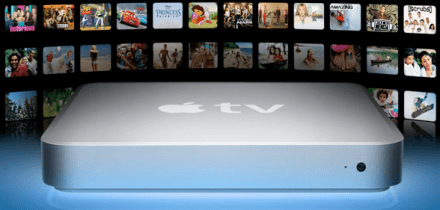
appletv.jpg

I’ve placed my order already to the Apple Store for:

  • Airport Extreme Wireless Hub (802.11N)
  • HDMI to DVI cable
  • DVI to RCA Video cable

The last two are essential because the AppleTV does not ship with any cables to connect the device to your TV.  Even if it did, the TV I’m going to hook up first is the one in the “playroom” for Jacob, which doesn’t have HDMI or Component inputs.  It’s a *gasp* regular, analog television.

There are some exciting hacks already online on how to put a larger hard drive into the AppleTV, install a terminal server, and add support for other codecs like XViD.

I’m obviously very excited to get it up and running.  So…

Thank you, Daniel.  I love you, too.

Third Parties Rush to Fill the DVD to AppleTV Gap

Wow.  That was fast.

I’ve previously written about the AppleTV, and how there was significant potential for the idea to work if there were simple ways for people to convert their existing DVD libraries to iTunes.

The problem is, due to legal liability, Apple likely has no intention to integrate DVD-ripping into iTunes.  So much for Rip. Mix. Burn.

Well, it’s the day after the AppleTV shipped, and already there is a third party application available specifically to rip DVDs to AppleTV supported formats.

DVD to Apple TV Ripper by WonderShare

Ironically, it’s Windows-only.  🙂

8-Core Mac Pro Leak on Macworld UK (Quad Core Xeon)

In November, on the eve of the launch of the new Quad-core Xeon from Intel, I posted a wish for a gift of an 8-core Mac Pro. The new chip has 4 cores on a single die, making each chip the equivalent of a 4 processor module by itself. Since the Mac Pro has room for 2, that would give you an incredible machine, and naturally I want one.

Well, check out this graphic, snapped from MacWorld UK, before they could pull it down (courtesy of Mac Rumors):

8corer_300.png

Looks like Apple is going to move to either a single 4-core processor or a double 4-core (8-core) monster very soon.

Some details on the specs of the chips available on Jason O’Grady’s blog today on the “Octo-Core” Mac Pro:

Rumors have been swirling since October 2006 that Apple would introduce an 8-core Mac Pro using dual Intel Quad-Core Xeon 53xx family processors (code-named Clovertown). Current Mac Pros use Intel Woodcrest cores that are in the Xeon 51xx family.

According to reports “Clovertown” will ship in two configurations (X5355 and E5345) with the same 1333MHz bus found in the Mac Pro running at 2.66 and 2.33GHz respectively. Two slower configurations (E5320 and E5310) aren’t expected to be used by Apple.

The Intel Xeon 53xx series will reportedly use Intel’s LGA771 socket, the same socket that ships in today’s Xeon 51xx series (a.k.a. Woodcrest) Mac Pros. Therefore it’s conceivable that current Mac Pro users could upgrade to 8-core machines – depending on chip availability of course.

So, although my birthday has come and gone, if you’d like to make my week, feel free to send me one of these when they do launch.

Just plain awesome.

Update (4/4/2007):  It launched today.  Check it out. 4.9 million configurations available at the Apple Store.  The price is nothing to sneeze at – that’s a very expensive upgrade!

Apple TV: Lead Zeppelin or Disruptive Rocket?

There is a fun debate going on right now, in the weeks building up to the shipment of the Apple TV.

The question is, will the Apple TV be a disruptive engine that will radically reshape the economics of TV and Movies?  Or, will it fall in the category of gorgeous, but underpowered boxes that fail to find an audience (et tu, G4 Cube?)

Now, I am not going to spend time here on the following, over-contested, issues like:

  • The Apple TV has too little storage
  • The Apple TV only has HD outputs
  • The Apple TV doesn’t include DVR functionality
  • The Apple TV doesn’t offer any “new” features

Sorry, but these arguments aren’t compelling reasons why the Apple TV won’t work.  The Apple TV has plenty of storage for caching.  Composite outputs are on almost every TV sold in the past five years.  The Apple TV is not meant to be a DVR (see below).  As for “new” features, like the iPod did?Jason O’Grady has been writing great posts about Apple products for over a decade.  He recently penned this article:

The Apple Core: Apple TV is a Lead Zeppelin

He basically argues that the problem with Apple TV is that unlike music, Apple cannot ship DVD-ripping software to customers.  As a result, consumers will have no easy way to convert their existing content (DVDs) to digital format.

Personally, I think Jason hit the nail on the head – what will make or break the Apple TV will be the supply of content for it.  Right now, there are three sources that matter:

  • User created content (Photos, Movies, Playlists)
  • Converted digital content (DVR, DVD)
  • iTunes content

I am just not sure that (1) and (3) are enough to make this platform work for most users.  There will have to be a solution for (2).

However, unlike Jason, I am not sure that Apple has to ship this software themselves to make this successful.  Companies have had excellent success defeating lawsuits to sell “DVD Copy” software that breaks encryption.  As long as people use the software purely for their own use, the courts have not yet upheld that the DMCA restrictions will apply.  Converting a DVD to another format for personal use certainly seems like it would fall under fair use, but that has yet to be tested in court.

In the meantime, if people want DVD Ripping software, it’s possible that retailers will step into the void to offer promotions and bundles, just to compete with the Apple online store.  Imagine:

  • Option 1:  Apple.com selling the Apple TV for $299
  • Option 2: MacWarehouse selling the Apple TV bundled with the new “DVD2AppleTV” software for $329?  $309?  Maybe even $299?

We’ll see, but the market very well may step in here and fill the void.

Why?  Because the current distribution channels for video, cable and satellite, have priced themselves into a very expensive place.

Check out this article from this personal finance blog, Get Rich Slowly.  It confirms a trend that I’ve been hearing from a lot of my 20-something and 30-something friends.

The logic goes like this:

  • Cable/Satellite in HD is expensive
  • Pay channels are expensive
  • I hate waiting to watch shows week-to-week anyway
  • I hate watching bad shows, trying to figure out which ones will actually be good.
  • I don’t have time for that much TV on a regular basis – I need to consume it in bursts when I travel, or when there are lulls in my life.

These are the trends that have driven NetFlix and Tivo, but now iTunes has provided another path.

You drop your cable subscription.  You take the over $1000/year you save and put it into:

  • Movies for big-budget blockbusters
  • Netflix for movies at home
  • iTunes for TV shows that your friends say you have to watch

I think Apple has a shot with (3) eventually subsuming (2) if they get the content.

My sister, for example, is 21, and a senior at college.  She just recently discovered The Office, and has been catching up on all the episodes.

She didn’t buy the DVDs – they don’t extend to the current season anyway.  She just bought them on iTunes.

We’ll see what happens with the Apple TV this year.  It’s possible this will be a dud.

But I know I want to buy one (actually four, if you’ve read my previous posts).  I’m interested in it as a solution to get rid of the DVDs that my 2-year-old son continues to maul.

However, I wonder if we aren’t underestimating the potential for iTunes -> TV as a disruptive channel. I personally spend over $1000 per year for content through DirecTV… is that really rational?  How many movies and TV shows could I buy through iTunes and on DVD for that?  Is it worth it?

If it turns out that there is an early adopter market that is ready to buy the Apple TV because they either have figured out DVD ripping, or they already purchase iTunes video content, then this just might work.  Once demand for the Apple TV is strong, other vendors will likely step in to make the DVD ripping problem go away.  Oh sure, the MPAA will fight it tooth-and-nail.  But it’s more likely they’ll be forced to put more content on iTunes, and price it more competitively.

Cross Platform Development, Round 2

Even though my blog is now over six months old, I continue to be flattered when I see links to my posts on other sites. I love clicking through each one, and seeing what the author found interesting about my comments and my site.

Most of the links incoming to my site recently have been about coins. Apparently, my write-ups on the new Presidential $1 Dollar Coin program are finding a fan base.

However, I saw an interesting incoming link from the blog of an old friend of mine, Tony Chor, who runs the Internet Explorer 7 team up at Microsoft. It’s called, Cross Platform Development, and it’s basically a refutation of my recent comments about Joost.

I left a comment on Tony’s blog, but I thought it was worth a follow-up post here.

First, let me just say, Tony has been a Program Manager at Microsoft since before I even declared Computer Science as my major at Stanford.  So he knows what he is talking about.

However, in this case, I want to explain a bit more about why I think that high-quality, cross-platform development is an excellent indicator of a great software team.

As Tony points out, writing great cross-platform code is hard. It is very easy to end up with “lowest common denominator” code. Also, if approached poorly, cross-platform development can include layers of code that hurt performance and optimization for any platform:

Also, in order to ease development, cross platform apps often have intermediate layers to factor out the underlying OS. These layers can impede performance and may prevent the app from taking advantage of native services like DirectX or Quartz. The resulting apps aren’t usually as fast as their native counterparts. Microsoft’s Mac apps certainly ran into this problem when writing cross platform “core code” apps on our Windows Layers for Macintosh (WLM) back in the mid ’90s (anyone remember Mac Word 6?)

Yes, I do remember Word 6. Ugh. What a mess. Unfortunately, that was a classic example of a very poorly implemented cross-platform framework, in my opinion. Rather than find commonality across high-level OS services, the Windows Layer Framework attempted to “reassemble” native high level services by re-aggregating low level services. Result? Great Windows application, since that was the model for Windows applications at the time. Terrible Mac application.

I know where Tony is coming from. IE 7 is a platform-specific application. They have not made the browser cross-platform, and Firefox has. Strategically, I believe this was likely a mistake, since it left an opening for a new entrant (Firefox) to enter a market that long since should have been closed. But I’m sure Tony & team have put a lot of thought into the implications of taking applications cross-platform.

It’s actually Tony’s last comment that I want to take issue with, however, in relation to my impression of Joost.

Finally, developing cross platform reduces the overall innovation a developer can provide. Building for multiple operating systems (or browsers) is never less work than building for one. The time spent architecting, coding, testing, and debugging for multiple platforms is time not spent adding new features, making the product more reliable or secure, or satisfying other user demands (or saving investors’ money).

There are certainly no guarantees of a gorgeous, OS-exploitive, fast application when you target only one OS, but it’s way harder when you are trying to serve multiple masters.

There’s no doubt that teams that can execute cross platform consistently well over time are probably great, but just think what they could accomplish if they chose to focus all that talent and energy on one platform.

This is where I have to humbly disagree. The top 10% of software engineers are not just a little bit better than the average software engineer. They are many, many times better. And in my limited experience, I have found that the great engineers can and do produce cross-platform applications that are best-in-class.

More importantly, I believe that being cross-platform makes great engineers better. Some of the best Windows engineers that I worked with in the late 1990s had a history of working on the Mac OS. There is something about an engineer who stays cross-platform that is like someone who learns multiple languages at an early age. They end up with an innate sense of architectural design and trade-offs that is so much deeper and more robust than a single-platform specialist.

True, I believe my biases are based more on entertainment applications than productivity applications. Bungie, before Microsoft acquired them, was an example of a company that produced great cross-platform games with simultaneous cross-platform release. Blizzard, makers of World of Warcraft, currently release their titles with simultaneous cross-platform release. Would their games be better, or more optimized, if they focused on a single platform? More importantly, would their releases be any more successful if they were single platform?

Maybe the difference is that an entertainment application, like a video game, has a custom interface that doesn’t have to live or work with other applications. They just take over your machine, for the most part. Productivity applications have to “play nice” – they need to look and behave like all of your other applications.

I’m not sure, but I will tell you this – I still believe that when you see rapid or simultaneous release of high-quality, cross-platform applications, in general you are looking at a very strong development team.

Many thanks again, Tony, for reading my post, and taking the time to respond. And sorry, by the way, that your site is now filled with Mac OS and Firefox ads… 🙂

Joost Now Available for Mac OS X Intel

Just posted on the Joost blog last week.  Joost, previously known as The Venice Project, is now available on Mac OS X.

As reported on GigaOm, In an interview earlier this year the CEO Fredrik de Wahl had explained how easy it was for the company to port their client to other operating environments. He had promised a Mac client in less than two months.

I will self-admit to being biased, but I always believe that it is an exceptionally good sign to see a client-software company go cross-platform almost immediately.  Supporting multiple platforms requires well thought out architecture and code decomposition, and I’ve found that the engineers that know how to do this tend to be on the high end of the scale.  Not only that, the code they produce tends to also stand up better over time.  Blizzard, makers of World of Warcraft, are the ultimate examples of this.  Every release of every product comes out simultaneously for Windows and for the Mac.

You can argue about the reasons why, but to me, it’s because they are just that good.

I’m excited to play with Joost first hand.

Celebrating 10 Years of the Mac BU at Microsoft… in Stickies!

Sorry, one last post for the night.   This was too cool to pass up.

The Macintosh BU at Microsoft, which was formed after the 1997 Apple/Microsoft alliance, just celebrated their 10th anniversary.  Apparently, what greeted them in the morning was gorgeous pixel art:

Of course, it turned out to not be pixel art per-se, but actually 1336 carefully pasted sticky notes on the windows.

I have to hand it to Microsoft, that’s 100% pure engineering culture right there.  Glorious.  I tip my hat to the team.

The full article about how they designed the sticky note art in Excel and then finished their work is here, on the Mac Mojo blog.

Steve Jobs Drops a DRM Bomb on the Music Industry: Thoughts on Music

Who would have guessed that on a random Tuesday in February, Steve Jobs would decide to drop a bomb on the music industry. But that’s what he did today, on the Apple.com website:

Thoughts on Music: Apple.com

There are a lot of good summaries on the web already. Here is the one from Don Dodge, for example. If you are not into reading long missives, I can summarize the article, Powerpoint-style:

  • Digital Rights Management (DRM) for music doesn’t work. 97% of all music on iPods is ripped from DRM-free CDs sold every year.
  • Critics who want Apple to open up FairPlay don’t understand that if they license it, it’s likely to be cracked constantly. The only thing holding it together is that Apple controls the hardware, the software, and the music protection.
  • The only rational solution is for the music industry to stop requiring DRM on their music, and go with an open format like MP3 or AAC. Every iPod ever made supports it.

For those of you not familiar with Digital Rights Management, DRM is the software that is built to prevent people from illegally copying files, like Music. For the iTunes Store, Apple uses a DRM called FairPlay which limits the number of machines you can play the music on. Right now, there is a lot of legal controversy in Europe over the fact that this DRM also “locks” people into the Apple iPod, because once they buy music on iTunes, they can’t play it on other devices.

This missive from Steve Jobs was unexpected, largely for some pretty significant reasons:

  • Everyone expects Apple to support “closed-systems”. It’s part of the baggage from the whole Windows vs. Mac debate from the 1980s.
  • Apple has sold over 2 Billion songs on iTunes. Apple doesn’t seem to need a DRM-free world.
  • The lock-in from iTunes & the iPod seems like strategic genius, and the basis of a new monopoly. On the surface, this feels like a magnanimous gift. Selfless, even.

There have been a lot of calls in the industry to give up DRM lately, but a lot of them have to do with the fact that people don’t want to accept a world where Apple controls the entire music industry (which is where it is heading right now). Bill Gates, for example, proclaimed a while ago that he supports a DRM-free approach to music.

Personally, I thought the DRM-free approach was the only way the rest of the industry would be able to crack Apple’s stranglehold on digital music. I see DRM-free music as the natural response to a monopoly, similar to the response of Linux to Windows.

However, now that I read Steve Jobs’ note, it make sense on so many levels for Apple to issue this statement now. In fact, I don’t know why I didn’t see it sooner. By issuing this statement, either:

  • Steve knows the Music industry will not go DRM-free, so his lock-in is secure. However, by going on the record this way, he lines up a plausible defense to the legal challenges in Europe, and avoids the perception of Apple as the gluttonous monopolist. More importantly, he paints a bullseye on the real monopolists – the four big music publishing houses.
  • Steve believes that the iPod brand and product are so dominant now, that even without lock-in, they win majority marketshare in the music player market, like the Walkman before it. In fact, the lock-in is likely over-rated, since such a small percentage of music is actually locked anyway, and the margins in the music are terrible.
  • Steve is not liking the tone and progress of licensing discussions with the TV and Movie industry, and he thinks that if a precedent can be set with Music that DRM is bad, then that will open up a world of video content to Apple & iTunes.

It’s hard to imagine the music industry embracing a DRM-free world. Fundamentally, they still believe that as copyright-holders, they have the right to control distribution at a fine-grained level to maximize profits. And of course, they are correct, they do have that right.

What they didn’t predict, however, was that attempts to enforce that right would lead to a consolidation of their distribution channels, which would shift market power from them to Apple. And now, they have too choose between a rock (Apple market power) and a hard place (DRM-free music).

I’ll end here with my favorite passage from Steve Jobs’ letter:

The third alternative is to abolish DRMs entirely. Imagine a world where every online store sells DRM-free music encoded in open licensable formats. In such a world, any player can play music purchased from any store, and any store can sell music which is playable on all players. This is clearly the best alternative for consumers, and Apple would embrace it in a heartbeat. If the big four music companies would license Apple their music without the requirement that it be protected with a DRM, we would switch to selling only DRM-free music on our iTunes store. Every iPod ever made will play this DRM-free music.

Why would the big four music companies agree to let Apple and others distribute their music without using DRM systems to protect it? The simplest answer is because DRMs haven’t worked, and may never work, to halt music piracy. Though the big four music companies require that all their music sold online be protected with DRMs, these same music companies continue to sell billions of CDs a year which contain completely unprotected music. That’s right! No DRM system was ever developed for the CD, so all the music distributed on CDs can be easily uploaded to the Internet, then (illegally) downloaded and played on any computer or player.

I couldn’t have said it better myself.

Skype Releases Version 2.5 for Mac OS X: Now with 640×480 Video Chat

Skype continues to release incredibly great software at a record pace. They have just officially released the new Skype client for Mac OS X, version 2.5.

The new release features:

  • Conference Calls with up to 10 people simultaneously
  • Send SMS messages to buddies with cell phones

You can download Skype 2.5 for Mac OS X here.

Jason O. Grady has also found a cool new hack for the new Mac OS X client – 640×480 Video Chat.

You can find the instructions here, in the Skype Garage. Basically, you just edit the config.xml file.

High-quality video calls

Save and close config.xml, restart Skype and do a video call. The remote party should now see your picture in 640×480 resolution, instead of the standard quality 320×240.

To enable high-quality video calls with Skype for Mac, first download the latest version of Skype for Mac. You need version 2.5.0.85 or newer.

Then, quit Skype, navigate to “~/Library/Application Support/Skype/yourskypename/”, i.e go to your home folder, and then the Library folder in it, and then Application Support in Library etc. Find the file called config.xml.

Open the file and find the <video> block that is itself inside the <lib> block. The <video> block probably looks as follows.</video></lib></video>

<video>
<device>Built-in iSight</device>
</video>

Now, edit this <video> block, adding capture height and width settings. The block should now look like this.</video>

<video>
<capturewidth>640</capturewidth>
<captureheight>480</captureheight>
<device>Built-in iSight</device>
</video>

Note that both parties need a fairly high-end computer (Mac or PC) to get good quality and framerate, plus a good Internet connection.

I’ve got to hand it to Skype. Not every company can produce high quality desktop software for multiple operating systems and still maintain the level of innovation, quality, and speed that Skype does. As a former developer, that tells me that Skype has an outstanding development organization, the right spirit, and the right people to continue to outperform.

I also love the open communication about experimental features like this, through a page like Skype Garage. People think innovating and moving quickly is unique to web development, but the right engineers and the right engineering philosophy can and will leverage the strength of their community to produce great client software as well.

Kudos to the Skype team on another great release.

Bill Gates Loses His Cool

As someone who has been following the Apple/Microsoft relationship for almost twenty years, this week offered a real first for me – Bill Gates losing his cool in the face of relentless questions about Microsoft Vista vs. Apple Mac OS X.

It starts with this Newsweek interview with Bill Gates about the launch of Vista.

There is no doubt that Bill comes off suprisingly snippy and defensive, and a few blogs have picked up on this. For example, the Open Sources blog at Infoworld had a few things to say about it.

Here is an example of Bill being overly riled up about some fairly run-of-the-mill questioning:

In many of the Vista reviews, even the positive ones, people note that some Vista features are already in the Mac operating system.

You can go through and look at who showed any of these things first, if you care about the facts. If you just want to say, “Steve Jobs invented the world, and then the rest of us came along,” that’s fine. If you’re interested, [Vista development chief] Jim Allchin will be glad to educate you feature by feature what the truth is. I mean, it�s fascinating, maybe we shouldn’t have showed so publicly the stuff we were doing, because we knew how long the new security base was going to take us to get done. Nowadays, security guys break the Mac every single day. Every single day, they come out with a total exploit, your machine can be taken over totally. I dare anybody to do that once a month on the Windows machine. So, yes, it took us longer, and they had what we were doing, user interface-wise. Let’s be realistic, who came up with [the] file, edit, view, help [menu bar]? Do you want to go back to the original Mac and think about where those interface concepts came from?

Hiss.  Down Kitty. I have never seen Bill Gates lose his cool like this, certainly not in print. Maybe it’s because Microsoft has been kicked around too long about Vista, and he’s taking it personally. Maybe it’s because, after a while, you’re tired of the guy with 5% market share getting all the adulation when you’re the guy who really won the fight.

Usually, the rule of thumb for PR is to not even acknowledge the second place player. If you do, you almost want to be overly welcoming, showing that you are not threatened at all by the challenger. It’s almost like you want to treat them like a kid brother trying to challenge you to a race. You should be empathetic, just shy of condescending, as if you understand their desire to win, and you want them to be happy, but you know there is no chance of them winning.

Arnold Schwarzenegger did this exactly right during the 2006 California Gubernatorial race to Phil Angelides during the debates.

Bill is normally far more statesmanlike with the press, and measured in his responses. He normally handles Apple questions with aplomb and diplomacy.

Maybe he’s feeling the end of his life in software coming up fast (2008) as he moves to a purely philanthropic role, and he doesn’t like the tenor of the market as he exits. Maybe he genuinely wanted to go out on top, with the Xbox 360, Zune, Vista and Live growing to dominate new markets. Instead, he’s faced with the Nintendo Wii, Apple iPod, Mac OS X, and Google getting all the limelight.

Maybe he’s taking the new Apple commercials just a little too seriously?  (I personally like the new ones up on Apple’s Website.  The imposter one is just too funny.)  Maybe he’s upset because iTunes is still not Vista compatible, and people actually care?

I don’t know, but somehow it makes me feel sad.  Despite my affinity for Apple products, I have a lot of respect for Bill Gates, and somehow this type of weakness on public display is just a downer.