Investment Lessons from 1957

Wow. Who knew cartoons from 50 years ago were this educational?

Many thanks to Get Rich Slowly for this one.

Here’s a 1957 cartoon about the virtues of stock market investing from the New York Stock Exchange (NYSE). Fred Finchley is a family man with a good job, a lovely wife, two rambunctious children, and all the conveniences of modern life. What he doesn’t have, however, is enough money to pay for his dream vacation.

When Finchley’s boss gives him a raise of $60 a month, he faces a dilemma. Should he use the money for savings? For a couple of nights on the town with his wife every month? The NYSE suggests that Finchley put his money to work in the stock market with a “monthly investment plan”.

“Working Dollars” does a good job of explaining how dollar cost averaging works. The cartoon makes a case for small, regular investments. Investing isn’t just for tycoons — using a monthly investment plan, even the average family can begin to acquire wealth.

It may not seem like it, but this cartoon was extremely well thought out, and the personal finance advice it offers is just as applicable today. Of course, I’m not sure how excited anyone would be with a $60/month raise right now, but I’m pretty sure the point is made with $600/month or more.

The most interesting subtlety is highlighted well by Get Rich Slowly, and I couldn’t agree more. The biggest danger in personal finance is lifestyle inflation, the tendency to increase expenses with any increase in income. The danger is, of course, that income is hardly reliable, but once you get used to a certain lifestyle, it’s incredibly hard to dial down expenses. This is particularly topical for people who work in high risk/high volatility jobs, like technology and sales. Even if you have steady pay, retirement often involves a shock to the system in terms of income.

A neat find.

Battlestar Galactica: Season 4 is the End

Earth or bust.

There has been a lot of coverage of this, so I’ll just point to the best article on the topic that I’ve read on SyFy Portal. The 22 episodes that will begin in January 2008 will be the last of the series.

Kudos to the producers and writers for capping this series off with a game plan and a strong finish. With these serial dramas, I’m beginning to have more and more respect for the teams that have the sense to not draw them out endlessly. Check out this quote from Ronald Moore:

“The temple gave D’Ann (Lucy Lawless) the glimpse of the Final Five that triggers the beacon that points the way to Earth,” Moore said. “At that point, you’re promising the audience that you were moving toward revelation. By the end of the season, we had taken that moment to decide that we were going to reveal four of the Final Five, and one of the characters had been to Earth and seen it.

“That’s probably the moment when we started feeling it. If we don’t start moving in that direction, you get to a place where you just feel like you’re jerking off the audience or treading water instead of just moving forward and pushing limits. We didn’t want to be in that position.”

Another interesting tidbit was some additional detail on “Razor”, the BSG made-for-TV movie airing this fall.

How to Mount your Blackberry Pearl 8100 MicroSD on Mac OS X

Infuriating.

I bought a 2GB MicroSD card for my Blackberry Pearl, so I could store pictures and music on the device more easily.

I love the Pearl, but as you know, RIM has had a tortured history with Mac-compatibility. Thankfully, the Missing Sync for Blackberry, by Markspace, is a very good solution.

However, I had one last problem. My MicroSD card was not mounting on my Mac as a USB storage drive. Infuriating! I went through pages of Google search results, and no luck. I downloaded a freeware app, called Mount Me X, and no luck.

If the drive doesn’t mount, you can’t synch music or pictures. Drat!

Suddenly I had an epiphany.

I went the Blackberry and entered the password on it to unlock it.

Bingo. USB drive mounted, with no problems. Everything works fine now.

I guess Mac OS X doesn’t know how to get past the unique RIM security feature. The Missing Synch does, however, so it’s strange to me that it doesn’t unlock the phone for you. It asks for the password anyway, when it syncs.

In any case, I hope this post gets indexed and helps some other poor soul out there, in need of help.

The answer is – unlock the Blackberry Pearl 8100 manually with your password before plugging it into your Mac.

This has been a public service announcement.

Update: I have moved on, and given up on the Blackberry completely.  See this post: Goodbye, Blackberry.  Hello, iPhone.

Is there a Roth IRA & Roth 401k Paradox?

I’ve been thinking about the new Roth 401(k) a bit, and running some numbers to figure out whether or not it is a better option than the regular 401(k). Originally, this post was going to be a post about those results, with an eye towards helping people who are making the same decision. Instead, however, I feel like I stumbled on a financial planning paradox.

Let me explain.

A Roth 401k is a relatively new option that some employers have started to offer as a retirement benefit to employees. With a Roth 401(k), like a Roth IRA, you do not get a tax deduction from your income on contributions. However, when you retire, you do not have to pay taxes on your withdrawals. In fact, when you leave the company, you roll it over into a Roth IRA, and it behaves just like any other Roth IRA.

If you exclude the estate planning benefits of Roth IRAs (which are significant in some situations), running the numbers shows that basically the Roth 401(k) is a big bet on your tax rate. With the Roth 401(k) you are betting that your tax rate when you retire will be higher than your tax rate now.

For example, let’s take an employee, Bob, who is 35-years old and has been able to save $5000 a year in his normal 401(k). In 2007, his company launches a Roth 401(k). Bob has a 31% marginal tax rate. Bob has the uncanny ability to generate exactly 8% on his investments, year-in, year-out. Should Bob switch over?

Well, Bob has been able to contribute $5000 to his old 401(k), so let’s just assume that’s the pre-tax cash he has available for retirement, period. If Bob contributes $5000 to his normal 401(k), he will have accumulated $566,416.06 by the time he is 65 years old. If we assume Bob can safely withdraw 4% of that per-year in retirement, he will generate $22,656.64 in income per year. However, he needs to pay tax on that income. Assuming his tax rate stays the same at 31%, he’ll get $15,633.08 per year after tax.

But what if Bob switches to the Roth 401(k)? Well, he no longer gets the deduction from his income, so Bob can’t afford to put $5000 per year into the Roth 401(k). With a 31% tax rate, Bob can only afford to put in $3450 (yes, I am grossly oversimplifying all the payroll taxes for this example). At $3450 per year, Bob will accumulate only $390,827.08 by the time he retires at 65. Sounds like a bad deal, right?

Wrong! That $390,827.08 is tax-free. If Bob pulls out 4% per year, he will pull out… $15,633.08 per year! That’s right, the same exact number! The Roth 401(k) is a wash.

Well, as usual, it’s not that simple. If the tax rate at retirement is only 28%, then the regular 401(k) wins. At a 28% rate, Bob gets to keep $16,312.78 per year. If the tax rate is 35%, then the Roth 401(k) wins. At 35%, Bob would only keep $14,726.82 per year.

So you could argue the Roth 401(k) is a big bet – will your tax rate be higher or lower in retirement? Some young people might believe it will be higher. When you start working, often you are at the bottom of your earning potential, and you might have big plans for your accumulation of assets over the next 40 years. Also, if you’ve read the Ben Stein book, you know that neither the US Government nor individuals are saving enough for retirement. That means higher tax rates in the future as the US Government tries to close the gap.

But they could be lower too, right? Are you really going to save enough to replace your current income? Do you need too? After all, in retirement, you aren’t paying off a mortgage, you aren’t putting kids through college, and you aren’t spending as much on clothing or consumables.

Tough call.

Now, there is a special case that doesn’t come down to this bet. What if Bob actually had $30,000 per year to save, but the 401(k) maximum is only $15,500 in 2007? Well, in that case, the Roth 401(k) is the better bet for sure, because saving $15,500 per year tax-free is better than saving $15,500 per year in an account that will eventually pay taxes.

But let’s ignore that case for now, because I want to explain the paradox. It’s really bugging me.

Let’s say you believe your tax rate is going to be higher in retirement. You put your money into Roth accounts to protect them. In fact, you manage to get all of your retirement assets in there.

Well, in that case, all of your retirement income is tax-free, which throws you into a lower tax bracket. In fact, the lowest tax bracket. And that makes your initial assumption false – you would have been better off taking the tax deduction when you were working.

BUT if you don’t put your money in Roth accounts, you’re back to square one, where it looks like your future tax rate will be higher than now.

This loop does have a solution – basically you should put some of your money in Roth accounts… enough to bring your taxable income in retirement down to a level that is equal to your current tax rate. That’s a really complex calculation when you consider issues like Social Security and predicting the tax structure of the US in 2040.

So, if you are fortunate enough to have high enough savings where you max out your retirement accounts, you probably don’t worry too much about this. Stuff your Roth 401(k) to the brim, and use other savings vehicles to cover the excess.

But if you don’t have that much money, the right answer is likely a mix of both taxable and non-taxable accounts. What that right mix is will be based on your estimation of how high your tax rate will be when you retire.

Don’t forget, this logic also applies to that famous 2010 loophole in Roth IRA conversion that I wrote about last year. The question of whether or not to covert is all about this bet on future tax rates.

If it helps, here are a few more articles I found on this topic. I hope my explanation above helped more than it hurt. 🙂

Review: Coke Zero VaniLLa

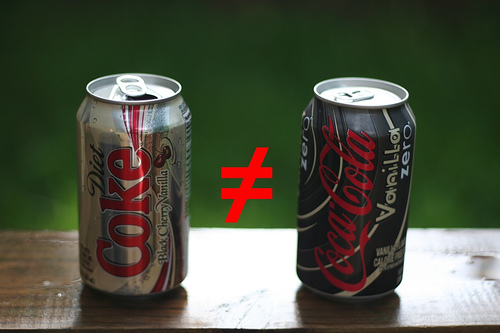
Blogging is really funny. A lot of people really liked my post on Diet Coke Plus. I think it’s because it turned into somewhat of a rant about how much I loved Diet Coke, and how much I hated Coke for killing my favorite variant, Diet Vanilla Coke.

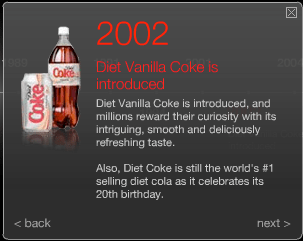
Well, I found out I wasn’t the only one ranting about Diet Vanilla Coke. In fact, this guy actually wrote a heart-sick letter to the Coca-Cola Company about the cancellation, back in 2005.

Anyway. The same guy wrote a review of Coke Zero VaniLLa. It was hilarious, so I had to get it and try it for myself.

Look, Coke Zero isn’t Diet Coke. It’s not just a branding exercise, the sweetner formulation is a different. Instead of Nutrasweet, Coke Zero uses a blend of Nutrasweet and Ace-K to get a taste that is supposed to be more like regular Coke. In fact, they have a whole ad campaign about this which I think is hilarious. (Since I used to manage a sub-brand of eBay, I find these type of marketing problems really interesting.)

Anyway, back to the new abomination Coke Zero VaniLLa.

I should have known what I was getting into when I saw the two capital-L’s in the title.

Rating: 6. It’s sad, but this is actually worse than Coke Zero. I don’t think I’ll be buying this again, but I would drink it ahead of other variants in a pinch.

I knew it wasn’t going to get higher than an 8, because the Coke Zero base is just such a bad start. But I was surprised to find out it doesn’t taste like vanilla. It only smells like vanilla! It was so bizarre, I had my wife confirm it. Very strange, and it grows annoying to have this wonderful vanilla smell, and then not have any taste to back it up. It just tastes sweet – but a fake sweet. Too much fake sweet. It over-promises and under-delivers. At least Coke Zero under-promises and under-delivers.

Update (6/14/2007):  OK, OK.  I’m upgrading this to a 7.  I’ve had a few more of these now, and I think I’m getting used to it.  Not as bad as the first one.

Coke, just bring back Diet Vanilla Coke already. Own up to your mistake.

So, here is my updated ranking of the Diet Coke universe:

  • Diet Pepsi (1)
  • Diet Coke with Lemon, discontinued (3)
  • Caffeine-Free Diet Coke (4)
  • Diet Cherry Coke (5)
  • Diet Coke with Lime (6)
  • Coke Zero VaniLLa (7)
  • Coke Zero (7)
  • Diet Coke Plus (7)
  • Diet Coke with Splenda (8)
  • Diet Black Cherry Vanilla Coke (8)
  • Diet Coke (10)
  • Diet Vanilla Coke, discontinued (11)

Diet Vanilla Coke forever, man.

LinkedIn: Ready, Set, Go!

This is a just a quick note to officially state that my first day at LinkedIn is tomorrow, May 29th.  I’ll be joining as Sr. Director of Product, working for the founder, Reid Hoffman.  I’m incredibly excited to join such a great team and to work on such a great product.

As with my previous role at eBay, I don’t plan on blogging about work here on Psychohistory – this is my personal blog.  However, I’ve always been open and honest about my background and my work, so this announcement is fair game.

If you aren’t familiar with the company, LinkedIn is a great new site that is based on the premise that the single most important asset of your professional career is your relationships with the people who you know and trust, and who know and trust you.  The site offers a suite of powerful tools that make it exceptionally easy to communicate & leverage your professional network in entirely new ways.  You can read more about the site and what it offers here.

Here are a few links you might find interesting, if you would like to learn more:

On a personal note, this means my 15-minute commute to San Jose has just become a 10-minute commute to Mountain View.  Such is life in Silicon Valley.

Garden 2007: Sweet 100, JetSetter, Banana & Green Grape Tomato Plants

I’ve been a bit surprised at the ongoing popularity of the one or two posts from last year on my tomato harvest, particularly the pictures of my Mr. Stripey tomato.

As a result, I thought I’d post an update for 2007 on my garden. I love working in the garden – my only regret is that I only have 3 garden boxes to work with. Of course, that’s about 10x the space I had a few years ago when I was growing plants on the balcony of my apartment.

This year, I’ve lined up what I think is an excellent crop:

Box 1: Peppers

I love medium-to-hot peppers, so this year I’m growing five varieties:

  • Banana
  • Serano
  • Jalapeño
  • Thai
  • Habañero

Here’s a shot of the 9 plants (2 of each except for the 1 Habañero)

Box 2: Cucumbers

I also grow cucumbers, using a trellis so I can get a large crop with very little space. This year, I’m growing four varieties of cucumber. Two years ago, my Japanese cucumbers reached almost 2 feet (24 inches) in length, so I’m trying to build on that success.

Here are the four varieties I planted this year:

  • Lemon
  • Japanese
  • Table (regular)
  • Armenian

I’m excited about the last one, because I’ve never grown Armenian cucumbers before. They apparently are light green skinned, and can grow to 3 feet long! Should be fun.

The plants in the bottom corner are herbs that I use to fill out the box – basil, oregano, thyme.

Box 3: Tomatoes

And finally, my prize plants, the tomatoes. This year, I’m trying to stretch a 3×6 box to handle 4 plants. I’m also trying out a much more robust 7mm steel support for the plants after last years disaster with my huge plants bending the smaller steel frames mid-August. I got them at Gardener Supply online.

The four varieties of tomato this year feature two hybrids for volume & eating, and two heirloom varieties for flavor & fun.

  • Sweet 100 (cherry)
  • JetSetter (large, red)
  • Banana Fingers (4″, orange/yellow)
  • Green Grape (small, green/stripe)

I’ve had them in the ground for four weeks, and they are really doing well. See below.

Should be a great year for the garden. Everything is really taking off. I feel like Brie from Desperate Housewives, but even my Hydrangeas are doing fantastically well.


Heroes Season 1 Finale: I Thought Peter Could Fly… (Spoilers)

Hopefully the fact that Peter Petrelli can learn the powers of other heroes is sufficiently old that I won’t get in trouble with the RSS Spoiler police. I’m still smarting from the flames about my Battlestar Galactica post about Starbuck…

Heroes finished off Season 1 this week with the big finale. “How to Stop an Exploding Man”

The question I had on my mind at the end was,

“Why does Nathan Petrelli have to fly Peter up to the sky so he can safely explode? Peter can fly also – he got the ability from Nathan.”

Well, I found this snippet on SyFy portal where the series creator comments on the issue:

“You know, theoretically, you’re not supposed to be thinking about that,” series creator Tim Kring told TV Guide’s Matt Webb Mitovich and Michael Logan. However, Kring did prove correct many theories following Monday’s airing that Peter was so distracted by the fact he was about to explode that he didn’t have the energy or the attention span to use an of his other abilities.

Of course, that’s trying to find a way to explain an action from a story standpoint. But from an entertainment factor, Kring admitted that he was much more interested in having Nathan — who had become somewhat of a bad guy on the show in recent weeks — to save the day.

“Yes, I will admit that there’s a very tiny window of logic there, but what can I say?” Kring said. “It requires the proverbial suspension of disbelief.”

Well, it’s nice to see I’m not the only one who got caught in that “tiny window of logic.” Otherwise, that was really my only problem with the finale of Season 1.

Well, that and the cheesiness of Sylar apparently “not really dying”. Lame. Sylar & Peter are both too powerful, frankly, to hang around too long. A lot of comics have the concept of borrowing powers temporarily, but when you get to keep them forever, you eventually just become a god. Being invincible quickly becomes boring.

How to Mount NTFS Drives on Mac OS X with Read/Write Access

Elliot, this post is for you.

A couple of weeks ago, I got really irritated with the whole Mac/Windows thing.  I had purchased a USB hard drive with the intention of using it as a backup drive for both Mac & Windows machines.

Unfortunately, I discovered that Mac OS X cannot write to NTFS volumes – it can only read from them.  I then discovered that Windows XP has lost the ability to read or write to HFS+ drives (Windows 2000 had it).

Well, I am here to say that there is a pretty cool solution for mounting NTFS volumes on Mac OS X.  Interestingly, it comes from Google.

The MacFuse project on the Google Code site is a BSD-license open-source project that lets you use any FUSE-compatible file system on Mac OS X.  FUSE (File-system in USErspace) originated on Linux, but apparently the port to Mac OS X has been live for a while.

NTFS-3G is the open source project that implements NTFS support for FUSE.

This lovely site has packaged together DMG installer versions of each for easy installation on Mac OS X.  (Please note: only do this if you are running Mac OS 10.4 or later, and are somewhat technically savvy)

Amazing.  It just works.  In fact, I’ve only hit one glitch.  If you fail to put away your NTFS volume properly on Windows (using the Safely Remove Hardware command), NTFS can get itself all locked up, and unable to mount properly.

Now, let me give due credit to this blog post for helping me find this solution.

Also, it’s worth noting that the write performance isn’t speedy right now.   The teams contributing seem to know this, and are working the issues.  As a result, I wouldn’t use this solution to make NTFS your default volume format for files.  However, if you need simple read/write to the occassional NTFS volume, this looks like a good answer.

Why Apple can’t ship decent NTFS support for Mac OS X is beyond me.  And why Microsoft can’t support HFS+ is also beyond me.  Given that there are tens of millions of machines out there who create and use each of these volume formats, I would say that it clears the bar of “important enough” to support.

Update (6/3/2007):  A brief warning.  Apple just released a security update that is currently not fully compatible with the ntfs-3g files.  My PowerMac was unable to read UDF (video DVDs) until I removed these files.   I’m sure a fix will be out soon, but be careful.  This thread on Apple Discussions captures the solution.

Judge Judy Episode on eBay Trust & Safety

Sorry, I’ve been sitting on this one too long, and I just have to post it.

This is the Judge Judy episode where the eBay scammer gets her due… to the tune of a $5000 judgement. More importantly, she gets taken to task for even pretending that this was OK or justified.

Premise: The defendant sold two expensive cell phones to the plaintiff, but then only shipped them pictures of the cell phones, claiming the listing was only for the photo, not the cell phone. When the buyer complained, she left them negative feedback claiming they were the scam artists! Sleazy.

Look, I know Judge Judy is no Rob Chesnut, but then again, Rob Chesnut is no Judge Judy. 🙂

I admit to having a soft spot for these type of shows… call it a weakness. But I admit a strong desire to see the few bad actors out there who make the world a worse place get some public humiliation.

Of course, if these buyers had purchased the cell phones on eBay Express, they would have been covered by 100% buyer protection, and they would have gotten their money back quickly. Still, that wouldn’t have been as much fun as this TV clip.

Diamond is NOT the Hardest Material (Who Knew?)

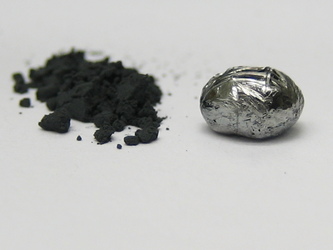
News flash. Two years late. Diamond is not the hardest known material. There are at least three known substances that are harder: Rhenium Diboride, Ultrahard Fullerite and Aggregated Diamond Nanorods.

I’m a little worried. I think this is what happens when you grow older. Technology has just outdated one of those simple scientific truths I learned about in school. What’s worse is that it took me almost two years to find out about it.

But before I get into a self-pitying “science is for the young” groove, let me tell you what I’ve learned so far.

First, a big thank you to Business Week. Yes, that’s right, Business Week. Not known for it’s scientific coverage, but the May 7, 2007 issue had a snippet on page 79 about the successful effort to create a substitute for industrial diamonds for slicing through steel. Apparently, the diamond reacts with the steel to form by-products that dull the blade. Scientists at UCLA have discovered a mixture of Boron and Rhenium that is hard enough to scratch diamond, and doesn’t react with steel. Press release dates to April 19, 2007, so it’s a pretty recent discovery.

In all fairness, Rhenium DiBoride is only harder than diamond in certain directions, due to its layered structure. But reading about it sent me to the web – what other substances have been discovered that are harder than diamond? Somehow, learning that diamond wasn’t the hardest material bar none made me realize that I last took Material Science coursework at Stanford in 1992.

Fortunately, in the 15 years since that coursework, a lot has happened to help me get up to speed in a matter of minutes. And I am glad I did, because new materials are just too cool.

First, let’s start with the simpler one: Ultrahard Fullerite. Fullerene is a form of carbon based on the C_{60} structure of buckyball-fame. From Wikipedia:
Ultrahard fullerite (C_{60}) is a form of carbon which has been found to be harder than diamond, and which can be used to create even harder materials, such as aggregated diamond nanorods.

Specifically, it is a unique version of fullerene (which is a class of spherical, ellipsoidal, or tubular carbon molecules) with three-dimensional polymer bonds. This should not be confused with P-SWNT fullerite, which is also a polymerized version of fullerene. It has been shown[1][2] that when testing diamond hardness with a scanning force microscope of specific construction, ultrahard fullerite can scratch diamond.

Very cool, but now, of course I’m thinking, “Tell me more about these aggregated diamond nanorods!” (I’m sure you were thinking the same thing.)

That, my friends, is a thing of beauty. According to this article at the European Synchotron Radiation Facility, Aggregated Diamond Nanorods are the least-compressible known material. To be specific, the density of ADNR is 0.2% to 0.4% greater than Diamond. ADNR is also 11% less compressible than diamond, and has an isothermal bulk modulus of 491 GPa (gigapascals) compared to just 442 for diamond.

Of course, I’m only reading about this now. PhysicsWeb.org had the coverage on this discovery in Germany back on August 26, 2005. (it’s actually a very clear & well written piece.) You can bet that the PhysicsWeb RSS feed is going into my reader tonight…

Wikipedia has a very nice summary here as well.

Oh well, better late than never. My guess is that one or two people out there also missed this, which is why I’m posting it tonight.

Now, I think we just need to find a way to start a luxury jewelry business that specializes in ADNR-based engagement rings. Why settle for diamond, which can get scratched so easily? We could make a fortune on this one on the high end…

Update (1/4/2010):  See the comment from January 2010 below, but it seems Rhenium DiBoride is no longer assessed as harder than diamond.

John Adams Dollar Coins: First Significant Mint Error Found (Double Edge Lettering)

Well, I guess it was inevitable.

With all the press coverage and excitement around the George Washington Presidential Dollar Coin errors, you just knew that people would be all over the next dollar coin looking for problems. However, even I am a little shocked at exactly how voracious the coin collecting community has been tearing apart this new issue looking for problems.

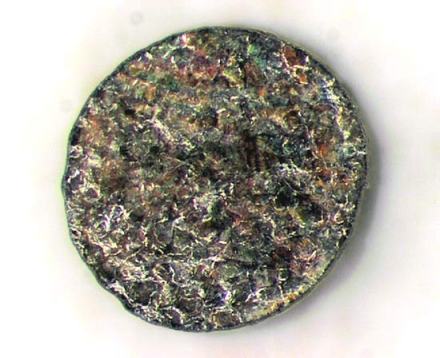
The Coin Collecting News has some great information on what looks like the most significant error to be found on the John Adams dollar coins to date: a coin with double edge lettering.

As a reference, this article on About.com has over a dozen possible errors documented already! I’m going to reproduce the list here, just to give you an idea of the incredible detail available already:

Adams Dollar Errors Listing (Obverse):

  • Die clash – Traces of reverse show on obverse
  • Over-abraded die – lost detail (probably to repair die clashes)
  • Over-abraded die – “Severed Head,” right side of Adams’ neck
  • Struck through grease filled die – lost numbers & words in lower legend
  • Struck through grease filled die – random spots & smears
  • Small die chips – “Warts” and “Infected President” types

Adams Dollar Errors Listing (Reverse)

  • Die clash – Traces of obverse show on reverse
  • Over-abraded die – “Severed Head,” left side of Liberty’s neck
  • Over-abraded die (New Type!) – “Blinded Liberty” shows Liberty’s right eye polished flat
  • Struck through grease filled die – random spots & smears
  • Die crack in torch (New Type!) – “Broken Torch” type has moderate die crack
  • Minor die break – “Filled S” type (One or the other S in STATES, both reported)
  • Minor die break – “Extra Curl” has small die break in Liberty’s hair between curls

Adams Dollar Edge Errors & Whole Coin Errors

  • Unburnished planchet – Planchet missed polishing & brightening step
  • Double edge lettering – Coin went through edge lettering machine twice
  • Shifted edge lettering – Edge lettering doesn’t line up properly with other coins
  • Embossed letters – Improperly called “dropped letters” – appearing on edge and surfaces

An unbelievable list for a coin that is four days old!

Hopefully I’ll be getting my first mint boxes of coin rolls soon. I’ll be selling them again on eBay, along with some unopened rolls of George Washington dollar coins.

Update (5/24/2007): For a limited time only, I am now carrying unopened, original John Adams Presidential Dollar coin rolls in my eBay Store. Click here to buy them on eBay Express. I also have a few more original bank rolls of the George Washington dollar coins.  Click here to buy them on eBay Express.

If you are interested in the other rolls I am carrying, click here for all the coins I am currently selling on eBay Express.

Do You Know the Rule of 72? Project Future Returns in Your Head.

I haven’t posted a lot about personal finance lately, and I’ve been meeting to get back on the horse soon.  In the meantime, this is a fun one for those of you who may not have heard it before.

When investing for a long term goal, like college or retirement, it’s often very useful to be able to quickly determine how long it will take to double your money.

Enter the Rule of 72.

Now, the Rule of 72 is shorthand, and not completely accurate.  But it’s accurate enough to be immensely useful.

The Rule of 72 says that if you divide 72 by the rate of return on an investment, you’ll get the number of years required for that investment to double.

So, if you find an investment that returns 8%, 72 / 8 = 9, so the investment will take 9 years to double.

I learned this rule about 15 years ago from my grandmother, and I’ve been using it for quick shorthand ever since.

For example, let’s say I want to know how much a $50K 401K might be worth over time.  Assuming an 8% rate of return, I can quickly determine that it will double in 9 years, quadruple in 18 years, octuple in 27 years, and be worth $800K in 36 years.

This also works, unfortunately, for loans, but in reverse.  If you take a student loan out at 7.2% for 10 years, well, you can expect to end up paying double what you borrowed in total.

I’ve also used this rule in business environments, especially when you are looking at compounding growth rates for business metrics like sales, revenue and costs.

Once again, the rule is really a shorthand, and not completely accurate.  Obviously, a 72% return doesn’t double in 1 year.   And a 1% return doesn’t double in 72 years.  However, it’s surprisingly accurate in the middle ranges, which apply to most situations.

This article in Get Rich Slowly has some variants that are fun. But for me, the basic Rule of 72 lets me quickly an easily assess what a return will really mean to an investment, in those rare moments when I’m away from Excel.

So enjoy this tidbit, and I’ll get to some meatier topics this week.

Blizzard Demos Starcraft 2 in Korea

When you play video games, you always remember the ones that absorbed huge blocks of time from your life. Starcraft was one of those games for me.

Well, it looks like the next great game from the company that brought us World of Warcraft will not be another Warcraft title or massively multiplayer game. Instead, they have taken the wraps off of a Starcraft sequel. The Starcraft 2 website is live!

For those of you who don’t play these types of games, Starcraft is a strategy game where you control armies of one of three species: Human, Zerg, or Protoss, and it’s a basic “mine, build & fight” kind of game. This one, however, was so well executed that it became the basis for professional competition in Korea, and a world-wide phenomenon.

The Blizzard games have inspired hundreds of copycat titles, but it’s an extremely hard problem to balance the design of the different races, units, resources, economics, technology and gameplay. In fact, it’s almost an impossible problem. Blizzard, however, does it better than anyone.

Here is a good write-up on the debut and press conference Q&A on GameSpot. Here is another one on Inside Mac Games.

Better yet… here is the CGI announcement trailer for the game, as debuted in Korea, on YouTube:

Here is a great video of the actual gameplay… notice again. Three key races (Terran, Zerg, Protoss) and a much better model of air/ground interaction.

Going back over 15 years, Blizzard has repeatedly demonstrated their ability to develop games that are outstanding in design and execution. What Pixar is to computer-animated film, Blizzard is to modern video games. As another hallmark of an exemplary shop, they deliver their titles for launch on both the Mac & PC simultaneously. You don’t see them complaining about time to market or cost. They know that a game of sufficient quality will pay for itself many times over, and with Blizzard’s track record, they always do.

I’m very excited to play this game, although I realize that in the modern Battle.net era, I will be hopelessly outclassed by other players before I even get the DVD home and installed 🙂

Update (5/22/2007): Nate has a post on this as well, and he found more great YouTube videos of the gameplay presentation.  I felt like I was getting a 20 minute tutorial on Protoss unit deployment.  Colossus!