Obama Inauguration in Legos

I have to say, I am completely uninterested in the inauguration “event” that is going on right now.   Then again, I’m not really into the Academy Awards either.  My guess it has something to do with the amazing amount of real work to be done, and the amazing amount of time, effort and money being thrown instead into a party in Washington D.C.

In any case, of all the inauguration coverage, so far I’ve found this piece the most interesting:

That’s right, the entire inauguration, including hand-built mini-figures of over 1000 people, including the entire Obama family.  Note, these are not the typical mini-figs – they are actually 4-inch people made of lego blocks.  Amazing.

Now that’s historic.  Thank you, LA Times.

The Fifth Cylon as a Traffic Driver

I know I posted on this topic last week, but I thought I’d add an update after the big Battlestar Galactica debut this past Friday.  Interesting to see how frak parties everywhere translated into traffic.

So far, despite the debut on Friday, it looks like my traffic may have peaked yesterday, on Saturday.  5380 hits to the blog that day, with my most popular BSG posts taking the top 5 slots for article popularity.

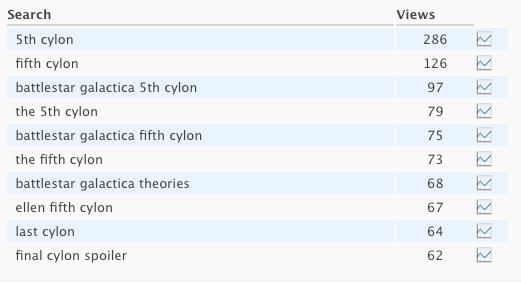
Why?  Check out the top 10 referring searches from Google, Yahoo, etc:

top-queries

Notice a pattern?  I’ve discovered that my blog post is the number one result in Google for the search “fifth cylon”.  At least, it is today.

2009 Ultra High Relief Double Eagle Gold Coin Available on Thursday, 1/22

The US Mint has announced that the 2009 Ultra High Relief Double Eagle Gold Coin will go on sale at 12:00pm EST on Thursday, 1/22.


It’s unclear what demand for this coin will look like, given its price.  (Likely $1200).  This announcement reflects the new US Mint pricing strategy for precious metals – basically a premium over market price, in buckets.  Still, gold coins continue to exhibit considerable demand, and this is an extremely flattering classicly-designed piece.

You can read more about the coin here on my blog, or here on the US Mint website.

Update (1/20/2009): Found this product page today on US Mint website.  Price is $1189.00, and delivery might take 6-9 months!  Limit one per household.   Talk about delayed gratification.

Read Lag Problems on Seagate Freeagent 1.5TB External Hard Drive on Mac OS X

This is one of those quick posts that I write hoping to save others a lot of time.

For the past two weeks, I’ve been trying to diagnose and fix problems I have been having with my external 1.5TB Seagate Freeagent Hard Drive.  I use the hard drive as my iTunes library, which I drive FrontRow using Mac OS X 10.5 on a Mac Mini on a 1080P LCD TV in the living room.

Basically, it’s our video server.

The problem was as follows:

  • Loading Front Row, we’d easily get to the list of movies (I have about 500+ movies on the system)
  • Flipping between titles, however, there would be a 3-5 second lag before the cover art and title of the new movie would load
  • The lag would also occur periodically while scrolling
  • The light on the front of the hard drive would pulse, instead of glow straight, during video operations

Needless to say, with a video library driven by remote, this type of lag is intolerable, and makes navigating a 500+ movie library incredibly frustrating.

After doing a number of Google searches, I found reports of read/cache problems on Mac OS X and Linux with the 7200.11 drives.

Here is an official note from Seagate on the topic, and here is a community thread on the issue.  Thinking I needed new firmware, and since there was no download on the website, I resigned myself to calling technical support.

I called Seagate Technical Support, and after waiting 20 minutes, I got on the phone with a man who had never heard of the issue, had no idea how to get the firmware for an external drive, and no idea what a Mac is.

Fortunately, while he put me on hold for 15 minutes on 3 separate occassions, I had time to think.

The problem cited on line was a read issue with video, but it seemed to focus on RAID setups.  That didn’t sound like my situation.  The light was pulsing, likely because the drive was trying to lower power use.  Why would it do that?

Answer: Maybe it was overheating because I had it in the cabinet with the sattelite receiver, which is warm, and there is poor ventilation.

So, I took the drive out the cabinet, and reattached it in the open air, on top of the cabinet.

Problem solved. Video navigation is snappy, and the light no longer pulses.  Clearly, because of the heat, it was going into low power mode in some way to try and cool itself.  That would lead to lags when it spun up for a read request from FrontRow.

So, if you have a Seagate Freeagent Extreme drive, and it exhibits this behavior, make sure it’s not overheating in an enclosed space.

As a funny aside, not only did I solve this entire problem while listening to hold music with Seagate Technical Support, I also wrote this entire blog post.  The guy is *still* off somewhere, trying to find the firmware revision for my model of drive.  I’m worried that he booked a flight to Malaysia to investigate the manufacturing of this drive personally.

Oh well.  The end story:

Unventilated enclosure for hard drive, BAD.  Seagate Technical Support, TERRIBLE.  1.5 TB iTunes Hard Drive, GOOD.

Update (1/20/2009): Unbelievable.  It looks like Seagate released the firmware patch for the 7200.11 hard drives this week, and it actually bricked the drives.  Not for me.  I’m watching this thread, and I’m not installing anything from Seagate until it’s safe.

Bernie Madoff: YouTube Justice

I haven’t posted here to date on the Bernie Madoff scandal.  No sense writing a huge amount on the topic at this point – it’s been well covered elsewhere.  Let’s just summarize my feelings as:

  • We will never see an end to Ponzi schemes, because they work.
  • This exposes some of the flaws in the fund of fund approach to hedge funds.  Picking a manager is almost impossible, adding a level indirection truly is. (courtesy Dave Swensen)
  • The level of scandal for absconding with billions is historic.  The number of charity dollars, particularly from the Jewish community, is truly shocking, and likely deserves its own, new circle of hell (for those Dante fans).
  • There is no punishment that can fit this crime.  The impact will literally be felt by millions.
  • This failure will likely be used as a scapegoat and excuse to permanently damage the hedge fund industry in ways that may materially harm our markets for decades. (knee-jerk, political grandstanding regulation)
  • We still haven’t heard the worst of it.

Now, among friends, I’ve joked that while I’ve heard the expression “death by a thousand cuts”, this situation seems to be a good opportunity to actually test that theory out.  (yes, dark humor)

For my birthday, my brother actually forwarded me this Youtube video, and I couldn’t stop laughing.  So I’m posting it here, since it seems to have a shockingly low view count.

Enjoy.

Would You Ship a Broken iPhone to Réunion?

My brother dropped his iPhone in the Pacific Ocean.  An original, $399 iPhone.

Needless to say, saltwater does not do good things to an iPhone.  It doesn’t boot anymore.   No recourse with Apple or AT&T.  He had to get a new phone.

As a result, I ended up with my own variant of Pierre Omidyar’s famous broken laser pointer… I listed the broken iPhone on eBay.

Well, it sold today, for $122.50.  However, it sold to an international buyer… in Réunion.

Réunion, as it turns out, is a little island in the Indian Ocean, off the coast of Madagascar.  It is a French island, and happens to be the first place in world (due to time zone) to adopt the Euro.

So, would you ship a broken iPhone to Reunion?

They paid with PayPal.  All the info lines up, roughly.  eBay has a hotmail address for the user, but the payment came from a wanadoo.fr email address.  However, the name and address on both is the same, although eBay lists United States for the registered country (with the Reunion address).

That could be a sign of fraud.  Or it could be the sign of a user who moved.  eBay data is pretty messy at times.

He has made recent purchases with positive feedback.  A cheap piece of wireless equipment, and an expensive ($259) piece of tree climbing equipment.  So, not just trivial items.

So, do I ship it?  Not sure.  The worst that would happen is that the credit card would end up being stolen, so PayPal would seize the funds.  And I’d be out a broken iPhone.

But, on the plus side, selling to Reunion is a new destination for me.  I’ve sold to over 30 countries on eBay at this point, and it’s getting harder to attract buyers from new ones.

I think I’m going to ship it.

People are basically good… right?

LinkedIn Hacks: Advanced Search Operators

I can’t help myself really.  What’s the point of putting advanced search operators in the new LinkedIn Search platform if no one knows about them?

So I have a new blog post up on the LinkedIn corporate blog:

LinkedIn Blog: Advanced Search Operators for the LinkedIn Pro

If you are curious, but not curious enough to click through, advanced search operators let you specify any query that you can configure with LinkedIn’s advanced search graphical user interface through just command-line tags.

Example:

If you want to find who in your network went to Stanford and currently works at Google, you can type:

school:Stanford AND ccompany:Google

This search will look for the keyword “Stanford” only in the school field of the LinkedIn profile, and look for “Google” only in the current company field.  Much more exact that looking for every profile that has “Stanford” and “Google” in it.

Thanks to the new search platform, millions of users are discovering the power of people search for the first time.  But there are also millions of power users who already use LinkedIn search to get their jobs done, and the team felt that giving them command-line-like power over the search experience would be appreciated by power users.

So enjoy.  Bringing power features like this to the LinkedIn platform is one of the joys of being on the team.

Battlestar Galactica Hits My Blog Stats… Again

Can you tell that Battlestar Galactica starts its final season in just ten days?  You can if you look at my blog stats…

Blog Stats

Over 200 hits to the post “The Fifth & Last Cylon” yesterday alone.

I’m even getting referral links from O’Reilly!  Love it.

No matter how I try to diversify this blog, ever since my first Battlestar Galactica post in 2006 (which still gets comments regularly), I continue to get massive traffic at key points in each season.

The only thing I think will be greater than the excitement for the series finale is the empty realization afterward that there is, in fact, no more.

Now for the ultimate spoiler…

… I am the fifth cylon.

January 16th, 2009

Startups, Technology Companies & Giambattista Vico

I had one of those “delightful” newspaper moments today.  I was going through my Sunday morning ritual, page-by-page through the Sunday New York Times, when I happened upon an interesting editorial in the Week in Review.

The article itself was interesting, but likely one I would have ignored in the online version.  (It’s still one of the virtues of print that I put myself in the hands of the editor, and read the Week in Review from beginning to end.)  What was delightful about it was its philosophical reference to Giambattista Vico.

You see, until today, I had no idea who Giambattista Vico was.  However, it turns out that this 18th century Italian philosopher published a theory of societies that happens to match, almost exactly, my recent theory about start-up technology companies and their development into large, successful enterprises.   Here is a summary from the Stanford Philosophy website:

Nations need not develop at the same pace-less developed ones can and do coexist with those in a more advanced phase-but they all pass through the same distinct stages (cursi): the ages of gods, heroes, and men. Nations “develop in conformity to this division,” Vico says, “by a constant and uninterrupted order of causes and effects present in every nation” (“The Course the Nations Run,” §915, p.335). Each stage, and thus the history of any nation, is characterized by the manifestation of natural law peculiar to it, and the distinct languages (signs, metaphors, and words), governments (divine, aristocratic commonwealths, and popular commonwealths and monarchies), as well as systems of jurisprudence (mystic theology, heroic jurisprudence, and the natural equity of free commonwealths) that define them.

In other words, Vico outlines three distinct phases for societies:

  • An age of gods, when man and immortal walk amongst each other
  • An age of heroes, when the gods have departed, but their children or disciples perform wonders with their power
  • An age of men, when their is equality and democracy among men, and a lack of the supernatural

(Yes, I’m grotesquely paraphrasing.  Bear with me on this one for a moment).

When I left eBay in 2007 to join LinkedIn, many people asked me why I was interested in joining a startup at that time.  Being an avid fan of Greek Mythology, I told friends that there were three phases to the tech company lifecycle in Silicon Valley:

  • The golden age, when gods (aka founders and first employees) walk the floors.  This is a time of incredible vision, passion, and risk.   The events and people of this era become myth and legend rapidly.  The company typically at this time has a product/concept, but no proven business model or engagement with customers.  The company is usually measured in tens of employees.
  • The bronze age, when the gods give way to the heroes, the first wave of executives who help grow and scale the company and fulfill its destiny.  Usually this is a time when the business model has proven out, and the larger risk to the company is its ability to manage growth and scale the organization in both talent and execution.  This is still a time of passionate debate and eccentricity, but now at a larger scale as the organization and business broadens.  This is when the company goes from tens of employees to thousands.
  • The iron age, when the gods and heroes have fled, and the company is managed as a large, public technology company.  At this point, the company is typically measured in tens of thousands.

Amazing similarity… no doubt both Vico & I were both fans of the classics.

When I joined eBay in 2003, it turns out that I joined the company well into its bronze age.  Many of the early employees (and a founder) had left, but most of the original heroes who worked under them and with them remained.   There was no separate corporate entity, and the PayPal acquisition had just happened.  In 2003, a product manager would still present a product strategy directly to Meg at times.  But by the time 2007 rolled around, as many of the heroes  departed, it was clear that eBay had entered its iron age.

Obviously, there are later phases for technology companies that can be interesting.  (Believe me, as someone who joined Apple in the mid-1990s.)  And there are always outliers (Google has stayed in its bronze age longer than most.)  But these phases do a fair job of describing the cultural dynamics of those first few phases of a technology company.

For companies, there are no clear delineations between the ages.  The transitions tend to be gradual, and as often as not tend to reflect the four-year pattern for stock option vesting schedules.  In the last few years, however, I’ve found this framework fairly effective in describing how company cultures evolve, and how that influences the enjoyment and job satisfaction of employees who prefer one phase over another.

Maybe the reason this analogy has been useful for me personally is because, as Vico supposed, it reflects a more general description of how groups of people evolve socially when they dedicate themselves to a single social contract.  For Vico, that was a nation.  For Silicon Valley, it’s a start-up.  It’s interesting to consider that the venture capital financing model and stock option vesting model tends to encourage this type of phasing almost naturally over the growth of a new technology venture.

Something to think about, of course.

Mom Gadget on MySpace, Facebook, LinkedIn & Twitter

Had to share this small gem of a find.  It’s not one of my normal RSS feeds, but my wife forwarded me this article from Mom Gadget:

Mom Gadget: MySpace, Facebook, Twitter, Linkedin – Double U – Tee – H

(Turns out, the reason she asked me to look at it was to translate the “Double U – Tee – H”.  I told her it was WTH or “What the Hell”.  There were several minutes of back and forth before she was convinced I was right.)

In any case, the article covers a basic cyber-mom question of what social networks she belongs to, and what each is for.  I thought the four snippets were great:

  • MySpace is a socializing website for teens, young adults, stars and music
  • Facebook is sort of the same only for young adults and tracking down your old school classmates and college friends without having to join Classmates.com for $29 plus a year.
  • Linkedin is for professional adults and for networking with people in business and sometimes it’s helped people land really awesome jobs.
  • Twitter – everyone is doing Twitter. Twitter is like text messaging meets the internet. It’s a way to text all your friends at once and have them text you back.

Of course, the primary theme of the article is one of social network fatigue. Apparently, this mom draws the line at these four.

Daily/Weekly use, in order of repeat visits (December 2008):

  • Google Reader
  • My Yahoo
  • LinkedIn
  • Twitter
  • WordPress.com (this blog)
  • Facebook
  • E*Trade
  • Mint.com

Twitter is the biggest surprise for me.  I’ve been playing with it for months, but I’ve noticed my activity has been increasing measurably.  This past month, I’ve been checking it multiple times per day (thanks to TwitterFon for the iPhone).  Mint.com also has spiked up now that it has iPhone integration.

The Benefits and Pitfalls of Inverse & Double/Triple ETFs

Caught this article on Seeking Alpha on Wednesday on the problems with using inverse ETFs.  It reminded me of a topic that I’ve debated quite a bit with Elliot Shmukler over the past two years, and have been meaning to write about here on the blog.

Since I haven’t commented much on personal finance topics lately, this seemed like an opportune time.  🙂

Quick set of definitions, if you aren’t familiar with the topic:

  • ETF:  Exchange Traded Fund.  These are funds that are similar to mutual funds, except that they are traded like stocks.  For the most part, they are index funds with extremely low expenses.  In the last five years, there has been an explosion of index-based ETF funds, ranging from the plain vanilla US Stock Market to indexes only for water companies.
  • Inverse ETF:  This is a fund that makes money based on the opposite direction of an index.  Example: An S&P 500 bear ETF, or inverse index, would attempt to give you a positive 20% return in the case that the S&P 500 dropped 20%.
  • Double/Triple ETFs:  A double (or triple) ETF attempts to give you double (or triple) the returns of a given index.  For example, a double oil fund would attempt to give you a 20% return in the case that oil rose in price 10%.

The original discussion Elliot & I had was back in 2007, when we were comparing two hypothetical portfolios:

  • Portfolio 1:  100% invested in the S&P 500
  • Portfolio 2: 50% invested in cash, 50% invested in double S&P 500 ETF

At first blush, it might seem like Portfolio 2 is the winner.  After all, with Portfolio 2, it would seem that if the stock market were to drop more than 50%, Portfolio 2 would allow you to keep 50% in cash safe and sound.  If the stock market returns more than negative 50%, then the portfolio seems to offer exactly the same return as Portfolio 1.

The trick, however, is the nature of the double ETF itself.  Double ETFs are not perfect instruments – because they simulate returns using derivative contracts, they try to match their promised returns on a daily basis.  (I’m assuming here, by the way, that the simulation of returns is perfect.  In real life, these funds have an additional problem of tracking error due to the nature of the way they are implemented.)

So if on Day 1 the S&P 500 goes up 1%, the double ETF tries to return 2%.  I say “tries” because it’s rarely perfect.  If the next day the S&P 500 drops 2%, the double ETF should drop 4%.

Unfortunately, it turns out that the math for doubling daily returns does not necessarily lead to a long term result that matches the long term double of the index.

An easy example of where this breaks is to take a huge increase followed by a huge drop.

Let’s say you put $1000 into the S&P 500, and $1000 into the double S&P 500 ETF.

On Day 1, the index goes up 40%.  Great news!  Your $1000 in the S&P 500 is worth $1400.  Your $1000 in the double S&P 500 ETF is now $1800, expected, for a 80% gain.  Everything is as expected on Day 1.

On Day 2, the index goes down 40%.  Bummer.  Your $1400 in the S&P 500 is now $840.  Your $2000 in the double S&P 500 ETF is now $360.  Wow.  That’s bad news.

You can see the problem.  Technically, over two days, the S&P 500 dropped 16%.   But the double S&P 500 ETF dropped 64%.  Most people assume it would have dropped 32%, which is double the two-day return.  This is the issue with percentages – the product of a series of percentage changes will not equal the product of a series of 2x those same percentage changes.  (Covered in Calculus D at most schools, for those in a nostalgic mood).

If you are skeptical, you might be thinking: “Well, Adam just picked the extreme example.  Of course a one day 40% move wipes you out. Most stock market moves are small, so the error is small.”

Unfortunately, this isn’t the case either.  A long series of small moves can lead to large errors as well.

Let’s assume a stock market where every day is either up 2% or down 2%.  In this case, we’ll go up twice for every down.

Let’s say you put $1000 into the S&P 500, and $1000 into the double S&P 500 ETF.

After thirty days of +2%, +2%, -2% (10 times), here is what you are left with:

You’ll have $1214 in the S&P 500, for a 21.4% gain.  But you’ll have $1457 in the double S&P 500 ETF for a 45.7% gain.  In just thirty days, you’re off by 6.6% (in gains).  In this case, it’s a good thing, but obviously in a market like the one we’ve been having over the past six months, it can be a very bad thing.

In fact, over the long term, the errors can be fairly extreme, and whether they are to your benefit or not is based purely on the size and ordering of the volatile movements.  The only way to get ride of the errors is to have an absolutely equally distributed, linear progression of the market in one direction.  And let me be the first to say that we will never actually see that happen.

So, what’s the takeaway here?  Simple.

The errors in inverse and double/triple ETFs grow rapidly based on volatility.  In low volatility markets, they can be used for a short period with expected results.  Like options and other derivatives, however, their tracking errors make them poor choices for long term allocation or investment.

They do make interesting options for speculative bets in the short term, especially in situations where:

  • You want to keep liquidity (ie, cash available)
  • You want to limit your downside to 50%

But watch out for those error rates…

Source Code That Allegedly Broke the Microsoft Zune

Thanks to Lawrence, Ryan, JSTN.

while (days > 365) {
    if (IsLeapYear(year)) {
        if (days > 366) {
            days -= 366;
            year += 1;
        }
    } else {
        days -= 365;
        year += 1;
    }
}

For non-programmers out there, this is what we like to call in technical terms “an infinite loop”. This code block will never finish running because on Day 366, the loop keeps checking to see if the day is greater than 365 (it is), and then checks to see if it’s a Leap Year (it is), and then checks to see if it is greater than 366 (it isn’t). So it does nothing, and then starts all over.

Perfect way to lock up your Zune every four years on the last day of the leap year.

Not sure if this is the actual code snippet or not, but a fun exercise. I could actually see this being on an introduction to programming test at some point.

My favorite quote about this fiasco (from the San Jose Mercury News):

“I’ve never heard of a consumer electronic device fail en masse like this,” said Matt Rosoff, an analyst with Directions on Microsoft, a Seattle-based research firm that focuses on the software giant.

Does anyone doubt that “Microsoft Zune” has become the “Ford Pinto” of consumer electronics?

New Years Resolution: Avoid Medical Myths

This is a fun post going into 2009.   Freakonomics pointed to a great piece at the British Medical Journal (part 1 & part 2) which goes through a fairly large number of medical myths that are widely believed, but that we now know to be false.

No sense going into 2009 repeating these falsehoods.  Although, despite being armed with the truth, no doubt many of your friends and family members will insist to the bitter end that “they know these to be true.”  (I watched a debate on #1 go on for over fifteen minutes this weekend between two family members.  I stayed out of it.)

In no particular order:

  1. Sugar does not cause hyperactivity in children.  In fact, if anything, they have proven that if you tell parents that their kids have had sugar, they will believe that they are more hyperactive.
  2. Suicide rates are not higher over the holidays. At least, not in the United States.
  3. Poinsettias are not poisonous. Chomp all you want, you won’t be able to kill yourself this way.
  4. You do not lose most of your body heat through your head. It’s only about 10%.  Wearing a hat is not the key to being warm, although it might be the key to feeling like you are.  The wonders of placebo.
  5. Eating food late at night does not make you fat. This is one of those “logical” facts that no one bothered to check out… until they did.  And found out it wasn’t true.
  6. You do not need to drink eight (8) glasses of water a day. This one surprised me.  No evidence for this at all.
  7. We do not use only 10% of our brains. Total BS from the turn of the century (last turn, that is.)  We’ll have to come up with another excuse for why everyone isn’t brilliant.
  8. Shaving hair does not make it grow back darker and thicker. So many people swear this is true.
  9. Reading in low light does not ruin your eyes. Seems like good news for the last few Americans who read.
  10. Eating turkey does not make you sleepy. Or at least, any sleepier than any other meat.  Yes, I know this gave everyone an excuse to know what tryptophan is (or at least, pretend like they do.)

Please do not take this post as some sort of challenge to pick fights with the less enlightened out there.  Believe me, they outnumber you greatly.

Instead, feel good knowing that your knowledgebase is that much cleaner now that you’ve cleaned out some of the garbage before 2009.

Holiday Gripe: Family Picture Digital Camera Paparazzi

Since it’s just a few days before New Years, I thought I’d share my absolute, number one pet peeve from this year (and every year’s) big family party: the family picture digital camera paparazzi.

No, my family isn’t so famous that actual Paparazzi stake out my grandmother’s house and hound the streets and yard for photos.  In my family, we are our own paparazzi.

You see, every year, we have a huge family party, and there is a distinct moment in the party where everyone gathers to take photos.  This family.  That family.  The cousins.  The aunts & uncles.  The kids.  The grandkids.  Etc.  It’s a complex form of set theory.

In any case, instead of there being just one camera (a good one) with a photographer, everyone has to have the shot taken “with their camera”.  Sometimes, you get 10 cameras taking the picture at once, with everyone in the shot looking in a different direction, like some sort of carnival funhouse picture.  Other times, one person has several cameras dangling, saying, “OK, now with this one!”

Ridiculous.  At first, it was just annoying.  Then it became upseting.  Now, I just get pissed off.

You see, digital cameras should have solved this problem.  But they didn’t.

One camera.  Many shots.  Files can be shared for free.  Everyone can get their pictures.  There is absolutely no reason for multiple cameras to be used (especially when you have iPhone cameras without auto-focus competing with full digital SLRs).

Yet there they are, every year.  In fact, every year, it seems to get worse.

One theory is that most people don’t know how to download or get digital photos developed.   So they use their camera because they know how to get those pictures.  Problem is, in my family, I know for a fact that many of the people with cameras have never, ever successfully downloaded or developed their own pictures either.  But maybe it’s a safety net… they know that someday, they’ll figure it out.  And then they’ll have those pictures on their camera.

Historically, the only way to really get a picture was to have the negative.  You couldn’t count on someone else getting the role developed and sending you the shots you were in.  So that could explain why baby boomers express this behavior – it’s an anachronism.

But what explains my Gen Y cousins and siblings doing the same thing?  (Besides the obvious upside of irritating me, of course.)  My guess is that the current social assumption is that everyone has a camera, all the shots are terrible, but all are uploaded and shared.  In this worldview, not having “your photos” to share almost means you don’t have an opinion, a voice, something to contribute.   So, once again, everyone has their camera, even in situations like group still photos, where one camera is a much, much better solution.

I’m probably more irritated than most because, in general, as long as Eric isn’t around, I typically am the one that everyone depends on for “high quality” pictures from these events. And it’s sad to find out later that, because everyone was looking a different direction, there is no good picture of one of the families this year.

When I am not irritated, however, I do think about how, despite all these integrated photo editing and uploading services, we’ve still failed as an industry to really solve the photo sharing problem for families.  They are all too techie, all too hard to really use.  And that’s a piece of why, to this day, everyone insists on getting “one more with my camera!”

I’m thinking of banning any other cameras in 2009.  Too heavy handed?  How do other people solve this problem?

Battlestar Galactica: Catch the Frak Up!

It’s late on Christmas Eve, but what better present to unwrap than 13 glorious minutes of Battlestar Galactica that summarizes the entire series in one fail swoop?

Sci Fi: Catch the Frak Up!

This type of snarky, quick-fix summary became big a few years ago as studios struggled with ways to get audiences to pick up serial dramas after the first season.  Unlike sit-coms, it really does matter if you’ve seen the earlier seasons, and they really don’t want you to opt-out of the whole series.

Whatever the reason, hat’s off to the BSG team.  I’ve seen every episode and I found this 13-minute video incredibly useful.  It reminded me of so many sub-plots and facts that I had forgotten.

Battlestar Galactica resumes on January 16th.  Be prepared and catch the frak up.